


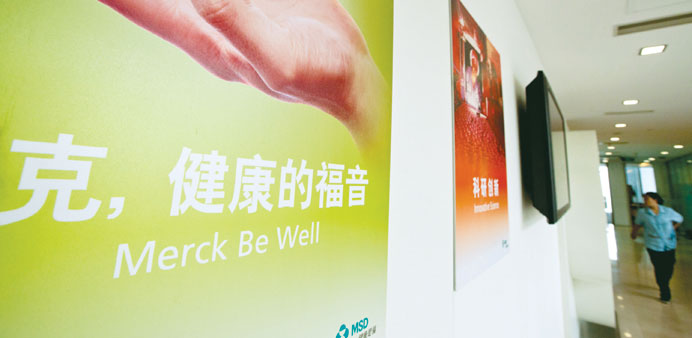
A woman walks through a Merck & Co office, known as MSD outside of the US and Canada, in Shanghai (file). Nations such as China, India and Brazil could account for up to half the growth in pharmaceuticals sales from 2015.
By Helen Thomas/Dow Jones
China’s economic watchdog is set to investigate the costs and pricing of drugs from about 60 domestic and international pharmaceuticals companies. That doesn’t mean pharma groups should catch a cold.
Emerging markets constitute a key plank of the industry’s growth outlook - particularly for European companies like GlaxoSmithKline, Novartis and Sanofi, which already make a quarter to a third of operating profits there, says Deutsche Bank. Sales in emerging markets grew at an average annual rate of 16% from 2007 to 2011, according to IMS Consulting, compared to 5% in developed markets.
Nations such as China, India and Brazil could account for up to half the growth in pharmaceuticals sales from 2015.
But individual markets’ contribution to pharma’s bottom line is, as yet, limited. China accounts for about 2%-5% of sales for European companies. Moreover, those sales are markedly less profitable than in developed markets. Companies like Glaxo have been cutting prices to increase volume growth. The UK company’s operating profit margin across its emerging markets business is about 34%; in the US it’s closer to 70%.
The focus of China’s investigation is not yet clear. One target could be products on the 500-strong national essential drugs list, a recently-expanded roster of medicines fully paid for by the state that comprises mostly low-cost generics. International pharmaceuticals companies have capitalised on fears about low-quality local products, using their brand names to get premium prices for off-patent medicines. That premium is coming under pressure.
But pharma groups should benefit as a larger chunk of China’s vast population gains access to their products. And longer term, there is the chance to improve profitability as more patented, innovative medicines are introduced to the market.
Companies actively seek to get their patented drugs on another list eligible for partial reimbursement, argues Deutsche, despite the increased risk of unilateral price cuts. And new drugs are launched in China on average 5 to 7 years after their international debut, a lag the government wants to remedy by encouraging local clinical and research investment. That China’s authorities - like governments the world over - are seriously scrutinising drug pricing is unsettling. But Big Pharma doesn’t need a sick note just yet.