


|
A total of 703 cases of hearing disorders amongst newborn babies were diagnosed under the National Newborn Screening Programme (NNSP) at the HMC between 2005 and 2012. |
Hearing aids were
prescribed in 600 cases.
During the same period, NNSP conducted hearing tests on a total of 138,046 infants in Qatar.
More than 100 cochlear implant procedures have also been performed with some 23 still on the waiting list, said Dr Khaled Abdul Hadi, head of Audiology and Balance Unit and chairman of NNSP.
He described the programme as “a leading initiative in the domain of screening newborns for hearing disorders in the Middle East and North
Africa region”.
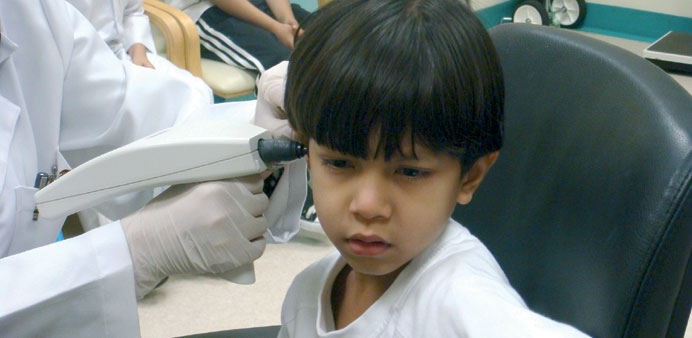
“The set of medical protocols adopted by the programme are deemed one of the best implemented in the world, where healthy newborns are screened through a three-phase plan: in the first phase, the newborn is subjected to the first hearing test when they are just 24 – 48 hours old,” he explained.
“In the second phase, when the newborn is two to three months old and in receipt of their first of several mandatory vaccines, the infant’s hearing is tested. The third and final phase takes place when the child is five years old and they undergo their third hearing test,” he said.
According to Dr Hadi, the newborns admitted to the Neonatal Intensive Care Units (NICU) for more than 48 hours, or those who are more prone to hearing disorder due to congenital causes, or due to mothers exposure to communicable diseases, or to pharmaceutical toxicity during pregnancy, would be subjected to a more stringent protocol where they undergo meticulous screening.
The success of the programme in the early detection of various hearing disorders prompted HMC to initiate diagnostic and therapeutic programmes and clinics including the Audiology and Balance Unit, Cochlear Implant Lab and the Electronic Cochlear Implants Programme.
A continuing educational programme for audiology research has also been created through a partnership between HMC’s medical education department and the University of Toronto, Canada.
“A clinical auditory science diploma programme was established in 2009, to train clinicians in the delivery of world-class healthcare services. Fifty clinicians have already graduated under the
programme,” Dr Hadi said.