


|
The European Parliament has called for the scrapping of two agreements granting the US access to European financial and travel data unless Washington reveals the extent of its electronic spying operations in Europe. |
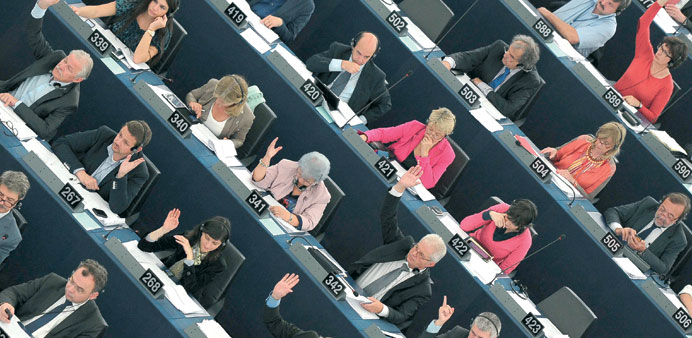
A non-binding resolution, passed by 483 votes to 98 with 65 abstentions, said that the US should come clean about its surveillance of e-mail and communications data or risk seeing the transatlantic information-sharing deals, created in the wake of the September 11, 2001 attacks, torn up.
The parliament cannot revoke the agreements without the support of European Union governments and the bloc’s executive Commission, which looks unlikely.
But the vote showed the depth of anger within the assembly over revelations from former spy agency contractor Edward Snowden about US electronic eavesdropping on allies.
Calls from some members of the parliament to suspend talks on a EU-US free trade deal, due to start next week, were rejected, however. The trade deal will be negotiated by the European Commission on behalf of the 28-nation bloc, but the parliament can veto the final agreement, giving it leverage in the talks.
Both data-sharing deals – the Terrorist Finance Tracking Programme (TFTP) and Passenger Name Records (PNR) – were struck in the last decade, despite misgivings in parliament that they would grant the US excessive access to European data.
The TFTP provides the US Treasury with data stored in Europe on international financial transfers. The PNR agreement covers data provided by passengers when booking tickets and checking in on flights, and passes the information to the Department of Homeland Security.
Last month, US officials confirmed the existence of an electronic spying operation codenamed Prism, which according to Snowden collects data from European and other users of Google, Facebook, Skype and other US companies.
In a separate leak, the US was accused of eavesdropping on EU offices and officials.
While many EU countries reacted angrily to the revelations, France was the only one that initially called for the suspension of the trade negotiations.
On Wednesday, French President Francois Hollande said the trade talks could proceed as planned, after the EU and US agreed to hold parallel talks to clarify the extent of US surveillance operations.
The European Commission has asked the US to reveal how much data it has access to and for what purpose.
A joint EU-US expert group will be set up to discuss the matter.