


|
|
Indian stocks fell the most in two weeks amid concern the central bank will have less room to cut interest rates as oil prices climb and the rupee weakens.
The S&P BSE Sensex retreated 1.5% to 19,177.76 at the close in Mumbai. Reliance Industries, owner of the world’s largest refining complex, fell to a one-week low. State Bank of India, the biggest lender by assets, dropped to the lowest level in more than nine months. The rupee weakened to within less than 1% of its all-time low.
The Reserve Bank of India left its key rate unchanged on June 17, ending three straight cuts. While official data June 14 showed wholesale-price inflation slowed to a 43-month low in May, a separate gauge of consumer prices rose 9.31%, the fastest after Argentina in the Group of 20 nations. India buys about 80% of its crude from overseas. The central bank is due to review borrowing costs on July 30.
“Rising oil prices and a weak rupee is a double whammy for us,” Kaushik Dani, a fund manager at Peerless Mutual Fund, which has about $751mn in assets, said by telephone from Mumbai. “If the rupee holds at current levels any hope for a rate cut is out of the window.”
Crude oil gained, with West Texas Intermediate surpassing $100 a barrel for the first time in nine months, on shrinking US stockpiles and concern Egypt’s political turmoil will lead to Middle East supply disruption. London-traded Brent crude, the benchmark for two-thirds of the world’s oil, rose 1.2% to $105.28 at 5:19pm, a third day of gains.
Reliance decreased 2.4% to Rs850.85, a second day of declines. The stock soared 8.8% last week, the sharpest weekly gain since the period ended September 2, 2011. The government June 28 agreed to link natural-gas prices to global benchmarks starting April 1, 2014.
State Bank tumbled 4.6% to Rs1,898.75, the lowest level since September 13. HDFC Bank, India’s largest lender by value, dropped 0.9% to Rs650.65. ICICI Bank retreated 1.4% to Rs1,064.
Indian Oil Corp, the country’s biggest state refiner, sank 4.6% to Rs225.7. Bharat Petroleum Corp and Hindustan Petroleum Corp both lost 3.8%.
The fuel retailers, which are not members of the Sensex, sell diesel, kerosene and cooking gas below cost to help curb inflation. While the government compensates them for such losses, higher oil prices increase their import costs.
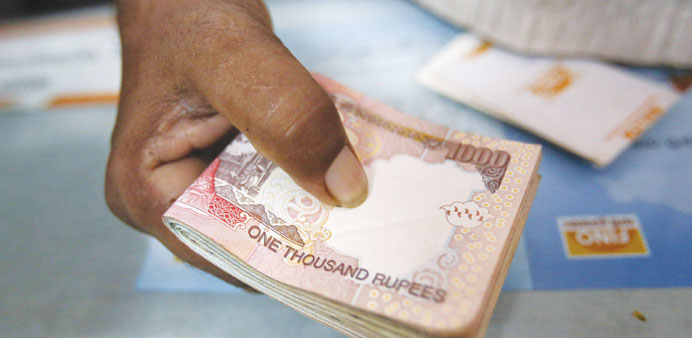
The rupee weakened 0.9% to Rs60.22 per dollar in Mumbai, its third day of losses. The currency plunged to an all-time low of 60.7650 on June 26 after the US Federal Reserve signaled it may pare stimulus measures this year.
“The one big concern among investors is India’s inability to manage its current-account deficit and the impact of that on the currency,” Ashok Wadhwa, group chief executive officer at Ambit Holdings, said in an interview to Bloomberg TV India yesterday. “Investors believe in India’s medium to long-term story but are suspicious and concerned about the short-term story.”
The imbalance in India’s current account, the broadest gauge of trade, is the biggest risk to an economy that grew a decade-low 5% in the year ended March, according to the central bank. The International Monetary Fund estimates the gap at 4.9% of GDP this year, compared with 3.3% in Indonesia and a surplus of 2.6% in China.
The Sensex has retreated 5.5% from a two-year high reached on May 17 as the prospect of reduced monetary easing by the US prompted global investors to pull money from emerging markets. They sold a net $1.76bn of Indian equities in June, ending 12 straight months of buying. Foreigners sold $1.1mn of local stocks on Tuesday, paring this year’s inflows into stocks to $13.5bn.
The CNX Nifty Index on the National Stock Exchange of India slid 1.5% to 5,770.90.