


Reuters/Lima
Peru has abundant natural gas reserves, but President Ollanta Humala’s $11.5bn plan to use them to transform the country’s underdeveloped south is facing mounting hurdles.
The US shale gas revolution, left-wing guerrillas who operate near Peru’s gas fields in the jungle, and difficult negotiations with energy firms have dragged the expected finish line for Humala’s flagship project far past his 2016 term limit.
The delays underscore the risks of making natural gas plans, especially in an emerging era dominated by cheap US shale reserves, causing some investors to re-evaluate projects in Peru.
Humala wants to diversify Peru’s fast-growing economy with what would be the first plastics plants along the Pacific coast of South America while generating power for new mines and providing Peruvians with cheap fuel.
The plan calls for a $4bn natural gas pipeline, a $3.5bn petrochemicals factory and $4bn in power plants that would rely on Peru’s main gas fields, known as Camisea, which have nearly 13tn cubic feet of proven reserves.
But two years into his term, no parts of the plan have gone past the design phase. Concessions have yet to be auctioned for the 1,000km pipeline and power plants, while tough negotiations over ethane supplies for the petrochemicals complex have barely started.
Committed investors are impatient. “It is not enough to talk about it. Action must be taken,” said Sergio Thiesen, the regional head of Brazilian petrochemicals giant Braskem, which would build the $3.5bn factory as part of the plastics hub.
“Peru has a unique opportunity because it has the resources and the demand.”
Critics say the project’s design is driven by a desire to appeal to voters in Peru’s poorer south and that it would be cheaper to build the petrochemicals hub at the terminus of the country’s sole existing gas pipeline on the coast near Lima.
Humala, who has said he would like to be remembered for the project, likely will not be able to reap political benefits from its completion before he leaves office.
“There is no way this project will be ready in 2016 - any one of the components takes five years to build,” said a high-ranking official deeply involved in Peru’s energy sector. “This is about politics. It doesn’t make technical sense: it’s not well-designed, it’s incoherent, and will cost twice as much as necessary,” said the official, who declined to be identified.
Industry experts say the first petrochemical plant - which would produce 1.2mn tonnes of polyethylene a year for sale in Chile, Peru and Colombia - cannot open until 2018.
Humala has acknowledged the difficulties the project faces, especially surrounding the pipeline - a crucial initial step that will guarantee gas needed by other investments.
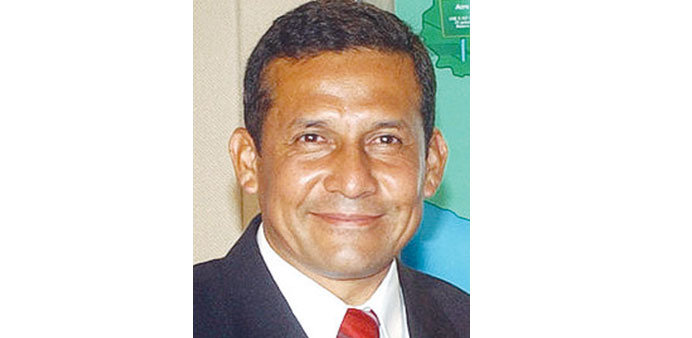
Ollanta Humala