


|
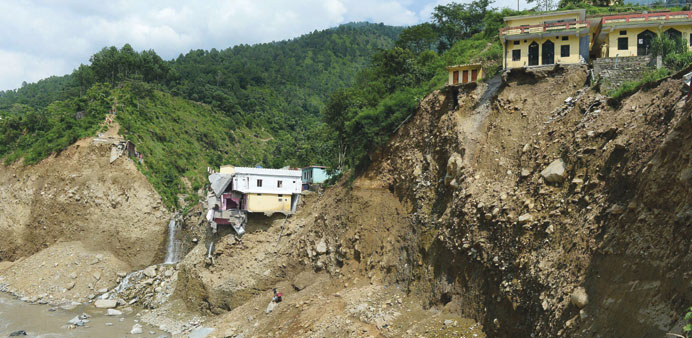
Construction along river banks will be banned in the devastated state of Uttarakhand amid concerns unchecked development fuelled last month’s flash floods and landslides that killed thousands, Chief Minister Vijay Bahuguna said yesterday. |
He also announced that a regulatory body would be set up to scrutinise future construction as the Himalayan state begins the herculean task of rebuilding following the June 15 floods.
“Permission will not be given for any kind of construction along the river banks,” Bahuguna told reporters in the state capital Dehradun.
“All guidelines will be strictly followed,” he added.
Raging rivers and landslides from torrential rains swept away houses, other buildings and even entire villages in the state known as the “Land of the Gods” for its revered shrines and pilgrimage sites.
Some 1,000 people died in the disaster and more than 3,000 are still missing, Bahuguna said on Sunday, while conceding that the exact death toll may never be known.
A state lawmaker has said the number killed could cross 10,000, as more bodies were recovered from under tonnes of debris and from rivers downstream, but this figure was rejected as “guesswork” by Bahuguna.
Thousands of soldiers, backed by military helicopters, have wound down rescue efforts after evacuating more than 100,000 people stranded when roads and bridges were destroyed.
Environmentalists and aid agencies have said rapid and unregulated development and deforestation was partly to blame for the floods in the state, which attracts thousands of pilgrims and other tourists every year.
Bahuguna announced that the Uttarakhand Reconstruction and Rehabilitation Authority would be established to spell out guidelines for all development activities in the state, keeping in mind the welfare of its residents for “the next 100 years.”
International charity ActionAid said construction of hydroelectric dams and mining projects over the last decade in the state’s many valleys threatened its fragile ecosystem.
“This aggressive and unregulated construction work has been playing ecological havoc for years,” said Debabrat Patra, ActionAid’s regional manager for Uttarakhand.
“With little forest left to hold the earth, another burst of heavy rain could be disastrous for the people living there,” he said in a statement.
Top industry body Assocham said it was time authorities woke up to the huge losses incurred every year from floods as a result of the development of flood plains throughout the country.
“Encroachments into the flood plains over the years have aggravated the problem,” it said in a news release.
“While we cannot do much about the natural phenomenon, we have to ensure that the nation remains always prepared for meeting any eventuality that can cause avoidable loss to human lives,” Assocham said.
Meanwhile, the Congress Party yesterday defended the chief minister who has been facing flak for “ignoring” the advance warnings of very heavy rains by the meteorological department.
“The Congress is satisfied with the way the state government is functioning,” Congress communications department chief Ajay Maken told reporters when asked about the party’s view on the advance warning available with the state government.
The weather office claimed it had alerted the state government of the impending heavy rains 48 hours in advance and that the pilgrimage could have been halted in time, saving hundreds of lives.
“The reasons (behind the tragedy) will be examined. The focus right now should be on evacuating the stranded people, ensuring relief and rehabilitation and checking the spread of epidemic,” Maken said.