


|
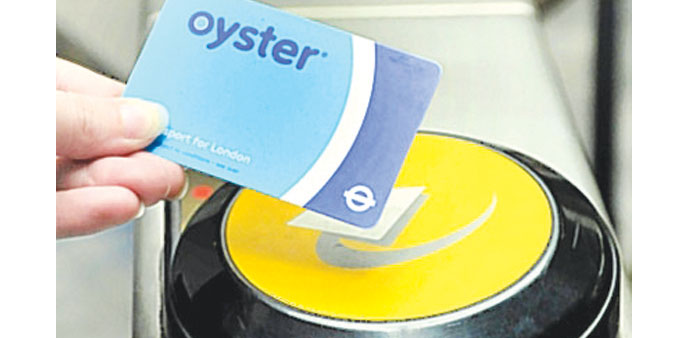
Nearly £100mn of passengers’ money is lying unclaimed on dormant Oyster cards, the Evening Standard revealed. |
Transport for London (TfL) admitted that the cash pile had built up from unused balances and deposits on Oyster, which marked its 10th anniversary this weekend.
A staggering £46.6mn is being held as deposits, charged at £5 per card, on 25mn dormant cards, those that have not been used for at least a year.
This is on top of credit of £53mn on the cards, bringing the unclaimed total on dormant ones to £99.6mn.
The amount held on Oyster in deposits has never previously been revealed by TfL, which made the disclosure after a Freedom of Information request from the London Assembly’s Liberal Democrats.
They are calling on the travel authority to make it easier to reclaim cash.
At present customers can get their money back at Tube station ticket offices, but only if they have topped up with cash.
Due to a technical issue, if the Oyster has been topped up by credit or debit card, refunds can only be made by phone.
TfL plans to remedy this by allowing refunds at ticket offices regardless of payment method but this have been delayed while computer software is tested.
Caroline Pidgeon, leader of the LibDem London Assembly Group and deputy chair of the London Assembly transport committee, said: “For far too long Transport for London has been keeping secret the huge amounts of public money they are banking due to so many dormant Oyster cards.
“Now that the immense size of this cash pile has been revealed it is time TfL ensured that the public can easily claim back their own money. It should be as easy to claim back a refund for the credit and deposit sitting on an unused Oyster card as it is to buy one in the first place.”
TfL said some of the dormant cards were held by occasional visitors to the capital and used infrequently. It added that Londoners also choose to keep a card in reserve.
Shashi Verma, TfL’s director of customer experience, said: “We encourage anyone who has finished with an Oyster card to have their deposit and any outstanding balance reimbursed. The steps involved in doing so are straightforward. Pay-as-you-go Oyster cards do not expire and customers are able to be reimbursed at a Tube ticket office or through the Oyster contact centre at any time.
“Registered Oyster card users are also able to claim balance refunds without presenting their card.”
TfL has recently written to every newspaper in London explaining how customers can get their deposit and balance on unwanted cards back. A £3 refundable deposit was required from March 2009, six years after the introduction of Oyster. The charge was increased to £5 in 2011.
Latest figures also showed that 42.5mn Oyster cards have been issued over the decade with a current credit of £151mn at an average of £3.56 and total deposits on these cards of £105mn.
Some 8.2mn cards have been cancelled in the past decade, though TfL was unable to say how much money has been refunded as a result.