


Reuters/Moscow/Dubai
Russia is hoping to rally the grouping of gas producers at a meeting today to support a price link to more expensive oil and keep gas prices high in the face of a boom in US shale gas production.
Senior officials from the 13-member Gas Exporting Countries Forum (GECF) including Qatar, Venezuela, Algeria and Iran will join President Vladimir Putin in the Kremlin two years after holding their first summit in Qatar.
Gas producers formed the group over a decade ago with the ambition of improving co-operation.
Suggestions by some members that GECF should mimic the Organisation of the Petroleum Exporting Countries (Opec) by controlling supplies was a worry for gas importers in December 2008, when they last met in Moscow.
Those fears have since evaporated as a surge in US shale gas production has helped create a glut on the global market, driving down prices on both sides of the Atlantic.
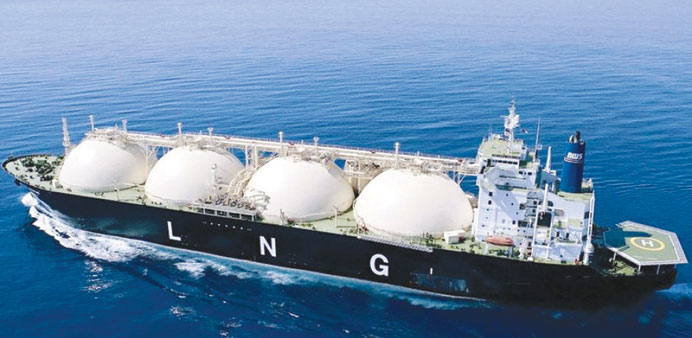
Gas demand and sales prices in Asia have surged since Fukushima, and emerging demand for LNG in Latin America has also reduced the amount flooding into Europe, Gazprom’s biggest export market.
Several GECF members are big gas consumers themselves, which may make them less willing to push up prices. At a Kremlin briefing on Friday, Leonid Bokhanovsky, the GECF’s Russian secretary general, said all producers were interested in maintaining the link to oil.
“We have several axes consolidating the interests of gas producers, above all the tie between gas prices and the oil product basket,” Bokhanovsky said. “The second component, which we believe stabilises gas markets and reduces the level of volatility on gas markets, is long-term contracts. There is full consensus of gas-producing countries on those two preconditions, and we hope they will be further confirmed during the summit.”
Russian gas export monopoly Gazprom says the indexing of gas to oil prices is needed in term contracts to fund pipelines that cost billions of dollars to build.
But Qatar, which has invested tens of billions of dollars in plants to chill gas to liquid, is less firmly attached to oil indexation, because it has the flexibility to ship LNG to the highest bidder anywhere in the world.
Gazprom received a major blow on Thursday when a court ruled it had to include market pricing in the rates it charges German utility RWE, a major client.
The case further erodes Gazprom’s market power in Europe, its biggest market, already hit by the region’s falling demand and increased competition from LNG.
Norway’s Statoil, its chief European rival, now sells over half its pipeline gas at spot prices. Norway and the Netherlands have observer status at the GECF.
The GECF says it members control 80% of world gas production and 70% of LNG production.
Russia, which sells most of its gas via pipeline, and Qatar, which exports mostly by ship, are major suppliers on the world stage.
Iran, in past years the most vocal proponent along with Venezuela that the GECF should control prices, is a net importer of gas despite holding the world’s largest reserves.
Iran’s energy minister, Rostam Qasemi, told a pre-summit meeting in Moscow on Saturday that he hoped the group could become an influential player in the global market, the ministry’s news website reported.
But the export capacity of many of the GECF members has remained stagnant over the last two years, while competition from major new suppliers is emerging in East Africa, Australia and the US.
Venezuela exports no gas and has become increasingly reliant on imports from Colombia. North African members Algeria, Libya and Egypt have all faced gas export problems over the last two years.
The UAE has imported more gas than it exported over the last five years and is planning to build another LNG import terminal to satisfy its own needs, while fellow Arab LNG exporter Oman’s gas thirst is squeezing exports, according to the US Energy Information Administration (EIA).