


Reuters/Moscow
Russia has suspended an independent election monitoring group for six months for failing to register as a “foreign agent” under a law that President Vladimir Putin’s critics say is part of a crackdown on dissent.
The Moscow-based group, Golos, angered the government by publicising evidence of fraud in a 2011 parliamentary vote that sparked opposition protests, and at the presidential election that returned Putin to the Kremlin for a third term last year.
It is the first non-governmental organisation (NGO) to have its operations suspended under the law Putin signed last July as part of a drive to decrease what he has said were efforts by Western countries to meddle in Russian politics.
Golos denies it falls under the law, which obliges NGOs that receive foreign money and deemed to be involved in political activity to register as “foreign agents”.
It is one of several groups that have refused to register, saying that they are not political and that the term “foreign agents”, with its Cold War-style undertone of treason, is meant to damage their standing.
“This cannot be called anything but a continuation of the persecution of Golos,” the organisation’s deputy head, Grigory Melkonyants.
Golos, which received most of its funding from the US and Europe, has faced intensifying pressure since Putin announced his bid to return to the presidency after four years as prime minister.
Its head, Liliya Shibanova, was detained for hours at an airport a day before the December 2011 parliamentary election, in which widespread allegations of fraud fuelled the biggest protests of Putin’s 13-year rule.
Golos was subject to tax inspections and critical coverage on television.
Last October, Russia ejected the US Agency for International Development (Usaid), which had provided most of the group’s funding, accusing Usaid of seeking to influence elections.
Putin has defended the “foreign agent” law, saying Russians have a right to know who is funding NGOs.
Rights groups and Western governments have criticised the law and a wave of inspections carried out by prosecutors and tax authorities in recent months, which has led to fines and court cases against several NGOs and now to the suspension of Golos.
Human Rights Watch said on Tuesday that a review of warnings and other documents prosecutors have issued to NGOs under the law “provide disturbing insight into Russian government efforts to suppress independent organisations”.
“The authorities have defined political activity so broadly as to ensure government control over just about any organised activity relating to public life,” the New York-based group’s regional director, Hugh Williamson, said in a statement.
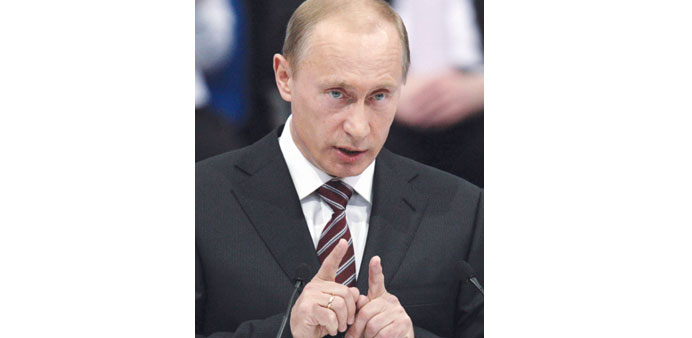
President Vladimir Putin