


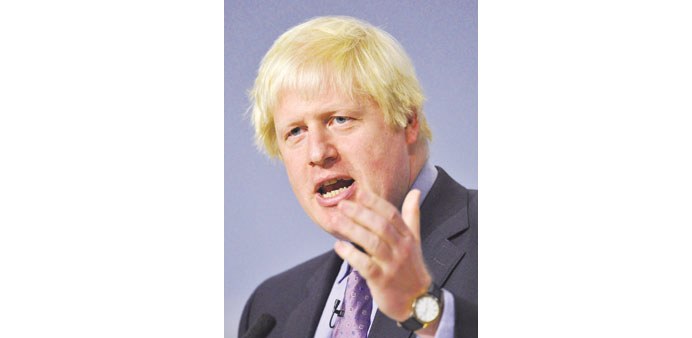
London Evening Standard/London
The number of people sleeping rough in London has surged by 13% in a year, more than doubling the total since Boris Johnson became mayor.
The official annual count recorded 6,437 in 2012-13, including 4,353 sleeping on the streets for the first time.
Almost half were British citizens but more than 600 were from Poland and nearly 500 from Romania.
Experts said the increasing numbers were a consequence of housing benefit cuts, soaring rents and the closure of a dozen hostels and day centres — leaving 784 fewer emergency beds in the capital.
Leslie Morphy, chief executive of the Crisis charity for the homeless, said: “The mayor pledged to eliminate rough sleeping in London by 2012. Instead we now see that the number of people sleeping on the capital’s streets — in absolute destitution in one of the world’s richest cities — has more than doubled on Boris Johnson’s watch.”
Morphy called on the mayor to demand that the government reverses the housing benefit cuts which she blames for the rise in homelessness and rough sleeping.
“Continuing failure to do so will lead to more of his citizens facing the horrors of life on the streets,” she said. There were 3,017 rough sleepers in 2007-08 - the period immediately before Johnson became mayor.
However, the report from the Combined Homelessness and Information Network shows that he has had some success in preventing people spending a second night sleeping rough.
Some 75% of people new to the streets did not spend a second night sleeping there — up from 70% the previous year and 62% the one before.
The mayor’s No Second Night Out initiative introduced public helplines for reporting rough sleepers, meaning they are more likely to be contacted by outreach workers and given help. This has also been a reason for the rise in the official count of rough sleepers.
UK citizens accounted for 47% of those sleeping out — with the next biggest group, 28%, from central and eastern Europe. There were 615 Poles, more than 50% higher than three years ago, and 497 Romanians — a five-fold increase on the same period.
At the end of this year Romanians and Bulgarians, of whom 60 were found sleeping rough, will gain the same access to work in the UK as other EU citizens, prompting fears of a further increase.