


|
The US government’s sweeping assortment of surveillance programmes to collect US telephone records and overseas Internet data have helped disrupt more than 50 terrorist plots in 20 countries around the world, officials told Congress yesterday. |
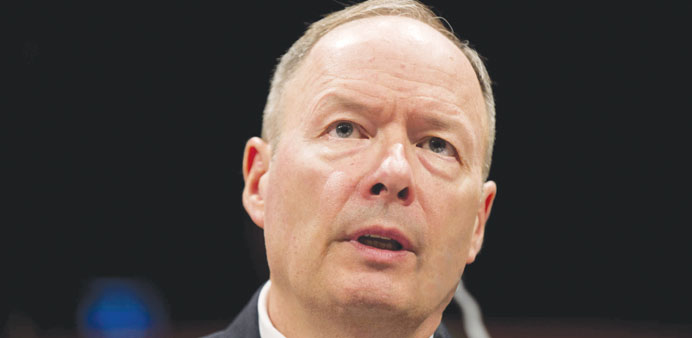
“In recent years these programmes, together with other intelligence, have protected the US and our allies from terrorist threats across the globe, to include helping prevent potential terrorist events over 50 times since 9/11,” said General Keith Alexander, director of the National Security Agency, referring to the September 11, 2001 terrorist attacks against the US.
The rare public testimony follows this month’s revelations that the FBI accessed US telephone records, followed by a leak about data collection targeting foreign internet users by the National Security Agency, which is specialised in electronic intelligence.
Sean Joyce, deputy director of the Federal Bureau of Investigation, pointed out four specific cases in limited detail to the House of Representatives’ Permanent Select Committee on Intelligence.
In the face of criticism from civil liberties activists, officials in President Barack Obama’s government have sought to explain and justify the surveillance measures in the two weeks since the programmes were revealed.
An e-mail from a Pakistan-based terrorist to an individual inside the US was intercepted by the NSA in 2009. The message was “talking about perfecting a recipe for explosives,” Joyce said.
The suspect in the US was located in Denver, Colorado, and tracked to New York City, where he was arrested with bomb-making component before confessing plans to attack the New York subway system.
A plot to bomb the New York Stock Exchange was taken down by the FBI after an individual in the US had contact with a Yemen-based terrorist under NSA monitoring.
David Headley, a US citizen linked to the 2008 Mumbai attacks in India, was found by the NSA to be “working on a plot to bomb a Danish newspaper” that had published an anti-Islamic cartoon. Headley and co-conspirators were later convicted in the scheme.
A fruitless post-9/11 investigation of an individual in the US was later reopened when the NSA acquired intelligence linking the suspect to a “known terrorist” overseas. “We were able to ... identify additional individuals through a legal process and were able to disrupt this terrorist activity,” Joyce said.
Alexander said that the other, more than 50 plots were classified “and will remain classified.”
He said that the intelligence agencies were precluded from publicly “going into more detail on how we stop some of these cases, as we are concerned it will give our adversaries a way to work around those and attack us or our allies. And that would be unacceptable.”