


AFP/Brussels
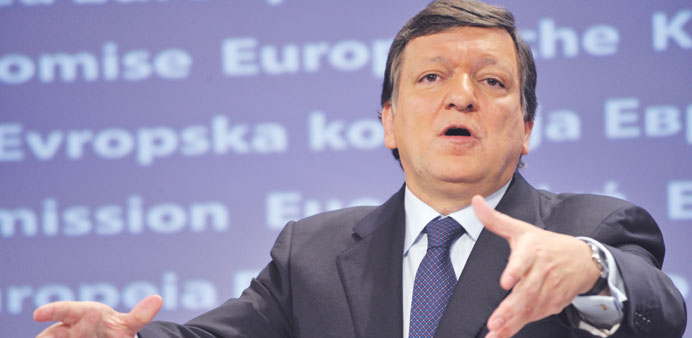
The head of the EU executive, Jose Manuel Barroso, has slammed France’s determination to protect Europe’s film and cultural industries in upcoming negotiations with the US on the biggest trade pact in history.
“Some say they belong to the left, but in fact they are culturally extremely reactionary,” the president of the European Commission said in an interview with the International Herald Tribune published yesterday.
Asked to comment, a Commission spokesman said: “There is no basic disagreement between the Commission and the French government on this question.” He also denied that Barroso’s criticism targeted France’s Socialist government.
Barroso’s unusually outspoken words followed a marathon round of difficult European Union talks Friday after France held up agreement between the bloc’s 27 trade ministers on the exact terms of the Commission’s mandate to negotiate a EU-US trade deal.
Paris insisted that the audio-visual sector be excluded from the negotiations. After 13 hours, a compromise was finally reached agreeing to the French demand but which also stated that the Commission could come back on the question if necessary.
Without naming France, Barroso said that those fearful of a US cultural invasion of Europe “have an anti-global agenda.”
Such critics have “no understanding of the benefits that globalisation brings also from a cultural point of view,” he added.
Commission spokesman Olivier Bailly said at a daily media briefing yesterday that the word “reactionary” was not levelled at France but at “those who on the sidelines launched personal attacks” on Barroso.
Asked whether he was referring to European film directors and other artists who backed France’s insistence that cultural products should benefit from special safeguards, Bailly simply said the criticism targeted “cultural and political figures.”
Greek director Costa-Gavras last week said Barroso was “a danger to European culture” while French right-wing European lawmaker Rachida Dati demanded he resign on the grounds he was “kowtowing to the US”.
EU treaties enshrined what is known as the “cultural exception” and it was therefore the Commission’s duty to defend such values, Bailly said.
Friday’s accord was welcomed by France while the Commission stressed it could come back to the matter should the EU-US talks snag on the issue.
EU Trade Commissioner Karel De Gucht said: “I am going to listen to what my American friends say on this (and) then we can ... ask for additional mandates” if needed.
EU officials have repeatedly warned that excluding any economic sector could hand the US an early bargaining chip in what promises to be tough negotiations.
Washington says no areas should be excluded from the talks.
Ministers were under intense pressure to agree the guidelines on which the European Commission will negotiate the EU-US Transatlantic Trade and Investment Partnership (TTIP) so the talks could be formally launched at the G8 meeting that started yesterday.
If the deal is done, it would be the world’s largest Free Trade Agreement: bilateral trade in goods last year was worth some 500bn euros ($670bn), with another 280bn in services and trillions in investment flows.
The EU says an FTA would add some €119bn annually to the EU economy, and €95bn for the US.