


AFP/Colombo
Sri Lanka announced plans yesterday to protect local manufacturers and retail traders by banning foreign investments in steel, cement and supermarkets.
Government spokesman Keheliya Rambukwella said a ministerial team has been appointed to curtail foreign capital going into sectors where locals have sufficient competence.
“In order to protect the local investors, it was decided that foreign investment should not be encouraged in small scale agricultural industries, retail trade, manufacturing of steel and cement and beauty care products,” the minister said in a statement.
He said the government, however, was keen to invite investments into manufacturing vehicles, boats and refining crude oil.
The announcement came despite Sri Lanka missing its foreign direct investment target of $2bn in 2012 by 50%.
The minister said the ban will not apply to projects that have already been cleared by the country’s investment promotion authorities.
Earlier this year, the government had approved a $15mn Pakistan cement manufacturing plant near the southern port of Hambantota .
The centre-left government of President Mahinda Rajapakse has also slapped curbs on foreigners owning property in the country.
Sri Lanka on Wednesday announced the easing of foreign exchange controls to allow foreigners to repatriate capital as well as profits from real estate transactions.
The Central Bank of Sri Lanka said it was making it easier for both foreigners and locals to take money in and out of the country as part of measures to spur greater economic activity.
Sri Lanka’s economic growth slowed to 6.4% in calendar year 2012, from 8.2% the previous year.
The exchange controls were eased because “the domestic financial sector has become stronger and more resilient”, the Bank said in a statement.
It said Sri Lankan commercial banks will also be allowed to lend in foreign currency for the first time to locals who earn abroad.
Sri Lanka has over 2mn of citizens employed abroad, especially in the Middle East, who sent home $5.9bn last year, making remittances the biggest single source of hard currency for the country.
Sri Lanka sharply raised import taxes in 2011 to avoid a repeat of a 2009 balance of payments crisis.
A 3% depreciation in 2011 followed by a free float of the local currency saw the value of the rupee fall sharply and made imports more expensive while reducing pressure on the trade balance.
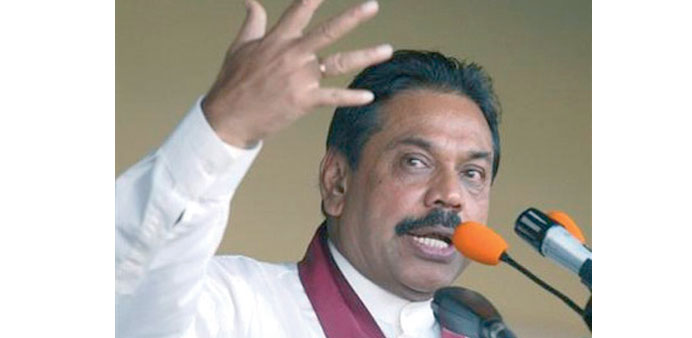
President Mahinda Rajapakse