


Audit committees are increasingly using internal audit reports for directing management to improve risk management culture and enhance business performance through good governance practices, according to an expert.

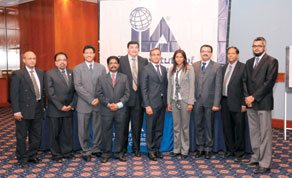
IIA and KPMG Qatar officials at the seminar
KPMG Qatar Risk Consulting partner Jeyapriya Partiban said this at the recently-held seminar on “Effectively Managing the Audit Committee Agenda and Expectations and Soft Controls”.
The seminar was jointly organised by the Institute of Internal Auditors and KPMG Qatar.
In today’s changing business landscape, Partiban explained, risks are multiplying and hence identifying and treating them in a timely manner is a big challenge.
KPMG Qatar Risk Consulting (Internal Audit, Risk and Compliance services) director Arjun Neelakantan said that in addition to the need of identifying and managing risk, it is also needed to be equally able to identify new business opportunities, and where necessary, to take calculated business risks.
“Often the risk of taking no risk is riskier than the risk itself, while talking about risk intelligence.
“The need is, open, candid and frequent communication with audit committee,” Neelakantan said.
He said that effective corporate governance is the cornerstone of shareholder protection and audit committees have a key role to play in shaping and guiding good practices.
On soft controls, KPMG Qatar Risk Consulting (Forensic Services) associate director Arindam Ghosh said that such would include ethics, values, competency, commitment and most importantly behaviour of employees influenced by factors such as leadership, openness, awareness and trust.