


By Salman Siddiqui/Staff Reporter
Vodafone Qatar’s high-speed fibre optic network will become fully operational by this August in West Bay’s Central Business District and the larger West Bay area by the end of this year, a senior official said yesterday.
Vodafone Business Services Director Niraj Singh told the media at a briefing for the network’s new Al Safwa Centre that the coverage of the fibre network would include homes and businesses in West Bay.
Moreover, he revealed that the most cutting edge fibre network developed by Vodafone in Doha is in Barwa City.
Data from a telecom network like Vodafone can reveal a lot of interesting facts about Qatar’s demography.
Singh showed a map that displayed the number of calls made from Vodafone’s network to countries outside of Qatar. In one hour alone, 34,188 calls were made to Asia; 976 to MiddleEast; 39 to Europe; 955 to Africa and 65 to the US. More or less this was representative of the ratio of expats in the country.
Vodafone is also interested in providing Machine to Machine (M2M) solutions to its corporate clients. At the Al Safwa Centre, Vodafone demonstrated how key characteristics of a fridge, including temperature, door open or closed etc, were being remotely monitored using their solution.
Singh said Vodafone had applied the same solution successfully in India for Pepsi, where more than 80,000 fridges were remotely monitored to ensure the quality of the cola products remained intact.
Further, he said, this technology was already being used in Qatar by Karwa’s taxi franchise operator, Al Million taxi, to remotely and efficiently manage the transport service.
Detailing the benefits of this technology, he said, “Forecasts predict that by the time of the Fifa World Cup in Qatar in 2022, there will be over 20 billion machines connected to the Internet around the world. These might be small things like domestic gas meters or big things like cars and freight containers. By connecting these machines, businesses can track their assets better, deliver innovative services and even provide healthcare services in a fundamentally different, more direct way.”
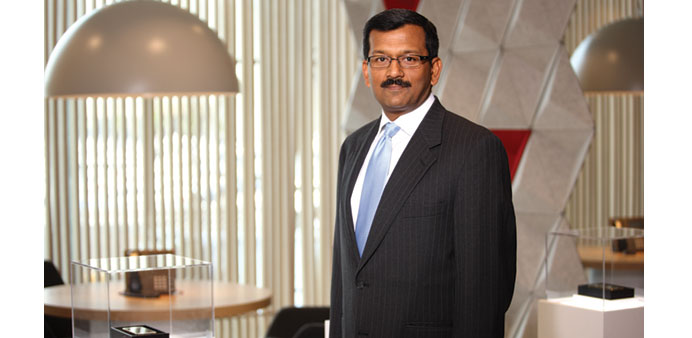
Niraj Singh, Vodafone’s business services director.