


|
As many as 188 national societies across the world share Qatar Red Crescent’s mission of supporting the vulnerable and safeguarding human dignity, QRC secretary-general Saleh al-Muhannadi has said. |
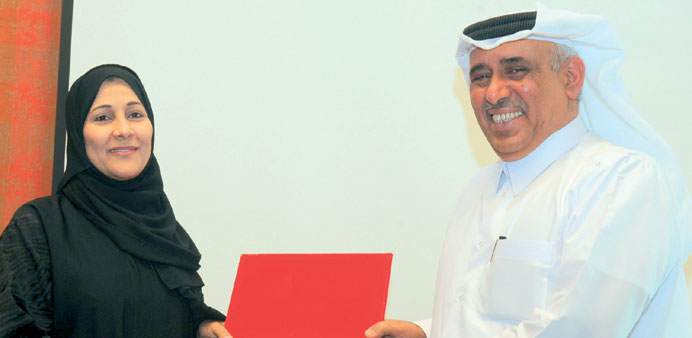
QRC observed International Day for the Humanitarian Movement with a large number of volunteers and partners at the Ritz-Carlton Doha, the organisation’s official hospitality partner, recently.
“The movement is the largest humanitarian network in the world, supported by millions of volunteers dedicated to saving and supporting vulnerable people,” said al-Muhannadi, stressing that volunteers were the driving force of QRC.
QRC has around 100 volunteers from different sections of society and organises various humanitarian programmes within and outside Qatar. It also conducts the largest food programme to address the issue of food security crisis in Niger.
Al-Muhannadi stressed that QRC has a strong presence in Syria, in collaboration with Syrian Red Crescent, to provide relief from what he said was a “real humanitarian tragedy” there.
He said QRC is part of the civil society and tries to cater to the needs of the local community first. At the same time, it is keen to maintain good working relations with international bodies and organisations, such as the United Nations, to deliver humanitarian services worldwide in keeping with approved international standards and legislations.
“Our 35 years of experience in the field gives us the ability to co-operate and form local and international partnerships, which are the foundation of our work to help others, provide shelter and other essential relief items in order to preserve the dignity of the weak, as well as by providing consolation and hope through psychological support for those affected by disasters and crises,” said al-Muhannadi, emphasising that QRC aims to reach out to the needy anywhere without discrimination or bias.
“People feel assured and comfortable when they hear the words ‘Red Crescent’ and ‘Red Cross’ because they signify relief and service of humanity, based on the concept of volunteerism. So, people should know about their services and be encouraged to take part in the efforts in different ways,” said Dr Aisha al-Mannai, QRC vice-chairman, highlighting the importance of promoting the concept of volunteerism in society and making the young understand the idea behind it.
Captain Khamis al-Marikhi, officer in the search-and-rescue team of the Internal Security Force (Lekhwiya), said their aim was the same as that of QRC - reaching out to people in need.
He recalled that the team was formed in 2004 on the directives of HH the Heir Apparent Sheikh Tamim bin Hamad al-Thani. Since then, it has undertaken 23 international relief missions in different parts of the world.
For example, it played a key role in relief efforts after an earthquake in Pakistan in 2005, covering an area of 40km from its station point. It provided great help to the locals, saving many lives. In 2006, the team went to Indonesia and spent two weeks in earthquake-hit Java to reach out to the affected. In the same year, it became the first Arab team to deliver aid in South Lebanon; it also helped flood victims in Somalia.
The team has conducted similar relief efforts in Chile, Haiti and Indonesia, among other places around the world. Similarly, it has played a key role in local relief efforts following incidents of fire, road and other accidents, and also in terms of building evacuation, with its highly trained staff and sophisticated equipment. The team also actively co-operates with QRC.