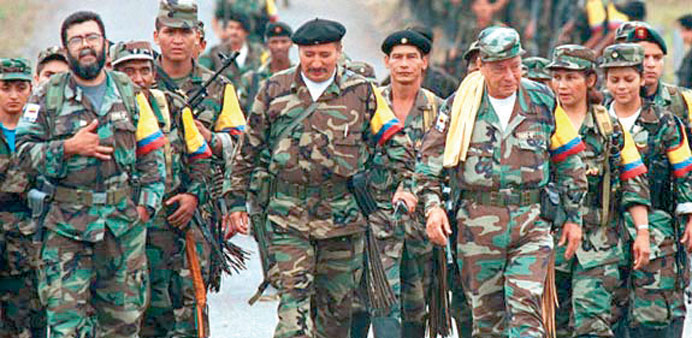
Reuters/Havana
Colombia and Marxist-led FARC rebels reported important advances on the critical issue of agrarian reform in their talks to end half a century of war but the government complained the negotiations were still moving too slowly.
The rebels also put a possible chill in the process by rejecting the notion of legal prosecution for their actions in the conflict, which has left thousands of people dead and millions displaced.
The statements came at the end of the latest round of peace negotiations, which began in November and have yet to produce an accord on agrarian reform, the first of five points on their agenda.
“There were important advances in this round of talks toward the construction of new agreements,” the two sides said in a joint communique.
They added that they had a draft agreement in hand on the agrarian issue, which includes distribution of land and rural development.
But lead government negotiator Humberto de la Calle told reporters “the pace of the conversations has been insufficient, inconstant.” “We could have progressed much more,” said the former Colombian vice president.
Conversely, Ivan Marquez, lead negotiator for the FARC, or Revolutionary Armed Forces of Colombia, said his team was pleased at how far they had come. “We’re advancing. The peace delegation of the FARC feels satisfied with the gains we are making,” the bearded, bespectacled guerrilla told reporters outside the Havana convention centre where the talks are being held.
The government and rebels are trying to end a war that dates to 1964 when the FARC was formed as a communist agrarian reform movement to fight Colombia’s long history of social inequality and concentrated land ownership.
The rebels have proposed giving 20mn hectares of land to the poor and limiting how much property big landowners can have. The government has insisted no land will be taken from private landowners, but acknowledged that rural development and distribution of land are key to achieving peace.
Should they get final agreement on the issue, they can move on to the others, which include compensation for war victims, ending the conflict, drug trafficking that has funded rebel activities and the political and legal status of the FARC members.
Many Colombians feel that the rebels must face justice for war casualties, the use of kidnappings to extort money and involvement in the illicit drug trade, the latter a charge the rebels have denied.