


Bloomberg/Mumbai
Indian stocks fell from a three-month high, paring a weekly gain, as the central bank said there’s “little space” for further monetary easing after cutting interest rates for a third straight policy meeting.
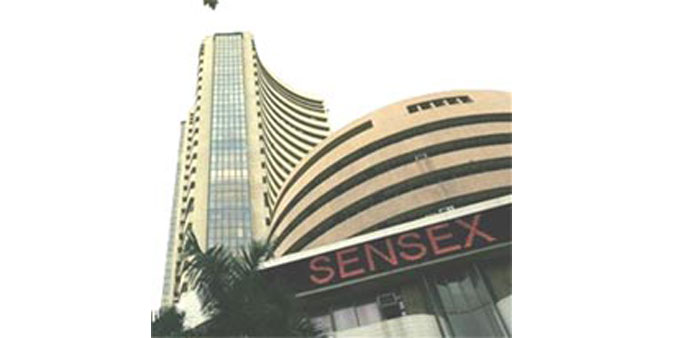
The S&P BSE Sensex index lost 0.8% to 19,575.64 at the close in Mumbai. The gauge climbed 1.5% this week, a third weekly advance, the longest stretch since December. State Bank of India, the nation’s biggest lender, paced declines among its peers. Tata Motors, India’s largest truck maker and owner of Jaguar Land Rover, tumbled 4%.
Reserve Bank of India Governor Duvvuri Subbarao lowered the repurchase rate to 7.25% from 7.5% yesterday, as predicted by 33 of 40 economists in a Bloomberg survey. The decision extends the only reduction of borrowing costs among major emerging nations this year. The Sensex surged 1.2% on Thursday on speculation the bank could announce a larger-than-estimated cut.
“The market had rallied significantly before the policy, so there’s a reason for it to correct; it’s not a sell-off,” Hemant Kanawala, head of equities at Kotak Mahindra Old Mutual Life Insurance, which has $2bn in assets, said. Kanawala said he expects the rate to be lowered further by as much as 75 basis points, or three-quarters of a percentage point, in the fiscal year ending March 2014.
Subbarao stepped up efforts to spur investment and consumption after the weakest economic expansion in a decade led to the slowest rise in wholesale prices in 40 months in March. A record current-account deficit and consumer-price inflation above 10% are among risks constraining room for further policy easing, the central bank said yesterday.
Gross domestic product may expand 5.7% in the fiscal year through March 2014, compared with the baseline projection of 5.5% for the previous 12 months, the central bank said. Wholesale inflation will probably be “range-bound” at around 5.5% in 2013-2014, it said.
The European Central Bank cut borrowing costs to a record- low 0.5% on Thursday to fight the euro-region’s recession. The US Federal Reserve said this week it will keep buying bonds at a monthly pace of $85bn, as Chairman Ben S Bernanke presses on with his effort to boost employment.
“Globally, central banks are in monetary easing mode and the system is flush with liquidity and that will keep the inflows coming and support our markets,” Manish Sonthalia, who manages $233mn in equities at Motilal Oswal Asset Management in Mumbai, said by phone yesterday. “The RBI’s comment that there’s ‘little space’ for monetary easing doesn’t mean there’s no space. We expect inflation to trend down and that may prompt the RBI to cut rates in the next review.”
State Bank tumbled 3.7% to Rs2,213.8, its biggest loss since March 20. ICICI Bank, the country’s second-biggest lender, retreated 3.6% to Rs1,129.95. Tata Motors plunged 4% to Rs285.6.
The Sensex has rebounded 7.4% since reaching a seven-month low on April 9. The gauge has climbed 0.8% in 2013 and trades at 13.2 times projected 12-month profits, compared with the MSCI Emerging Markets Index’s 10.4 times.
The 50-stock CNX Nifty Index fell 0.9% to 5,944, while its May futures settled at 5,951.10. India VIX, which measures the cost of protection against losses in the Nifty, dropped 4.5% to 15.55.
Indian sovereign bonds fell as the central bank reiterated that room to cut borrowing costs this year to support economic growth is limited because of inflation and a record current-account deficit.
“The balance of risks stemming from the Reserve Bank’s assessment of the growth-inflation dynamic yields little space for further monetary easing,” the monetary authority said in a statement yesterday after lowering the benchmark repurchase rate to 7.25% from 7.50%. The Reserve Bank of India also said it will reduce the proportion of lenders’ bond holdings that are shielded from market fluctuations, referring to the hold-to-maturity category.
The yield on the 8.15% securities due June 2022 rose one basis point, or 0.01 percentage point, to 7.74% in Mumbai, according to the central bank’s trading system. The yield touched 7.68% Thursday, the lowest level for a benchmark 10-year note since July 2010, and is little changed this week.
Thirty-three of 40 economists surveyed by Bloomberg predicted the cut in the repurchase rate today. Six forecast no change and one projected a reduction to 7%. Consumer prices increased by more than 10% in each of the four months through March from a year earlier, government data show. The current-account deficit widened to an all-time high of $32.6bn in the quarter through December, according to the latest available data.
Meanwhile, the rupee declined 0.2% to 53.9350 per dollar, according to data compiled by Bloomberg. It touched 53.6650 on Thursday, the strongest level since February 28, and has gained 0.8% this week. One-month implied volatility, a gauge of expected moves in the exchange rate used to price options, fell 42 basis points, or 0.42 percentage point, from Thursday to 8.37%.
Three-month onshore rupee forwards traded at 54.92 per dollar, compared with 54.81 Thursday, according to data compiled by Bloomberg. Offshore non-deliverable contracts were at 54.60 versus 54.41.
Asian shares rise after ECB rate cut
Asian markets mostly rose yesterday, aided by a European Central Bank interest rate cut aimed at stimulating growth in the sluggish eurozone and a positive US jobless claims report.
Seoul closed 0.43%, or 8.50 points, higher at 1,965.71, Shanghai ended up 1.44%, or 31.38 points, at 2,205.5 and Hong Kong rose 0.1%, or 21.66 points, to 22,689.96.
Sydney ended flat at 5,129.5, having lost 0.5 points, while Tokyo was closed for a public holiday.
ECB chief Mario Draghi revealed that the decision was by no means unanimous among members of the policy-setting governing council, but vowed to keep rates low for as long as needed.
Draghi also hinted at more easing, telling a news conference: “We will look at all incoming data and stand ready to act if needed.”
That suggestion sent the euro plummeting against the dollar but the single currency fought back in Asian trade yesterday with the euro at $1.3107 from $1.3063 in New York Thursday and at ¥128.73 from ¥127.93. The dollar rose to ¥98.23 in afternoon trade from ¥97.93.
Asian markets also responded positively to a better-than-expected US Labor Department report showing new claims for unemployment benefits had fallen to a five-year low.
Oil was down in Asian trade, with New York’s main contract, light sweet crude for delivery in June, dropping 25¢ to $93.74 a barrel and Brent North Sea crude for June delivery shedding 21¢ to $102.64 in afternoon trade.
Prices had surged nearly $3.0 in closing deals Thursday after the ECB rate cut.
An ounce of gold fetched $1,485.40 at 1035 GMT, compared with $1,455late Thursday.
In other markets, Wellington fell 0.66%, or 30.14 points, to 4,544.32; Taipei was flat, adding 6.52 points to 8,135.03; Manila rose 1.72%, or 121.93 points, to 7,215.35 — a new record high; Singapore was down 0.95%, or 32.49 points, at 3,369.90; Jakarta ended down 1.37%, or 68.56 points, at 4,925.48; Kuala Lumpur fell 1.09%, or 18.69 points, to 1,694.77; and Bangkok slid 0.64%, or 10.24 points, to 1,578.95.