


 |
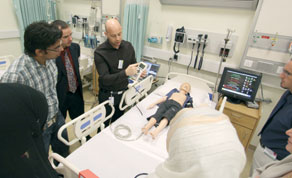
| Participants in the workshop receive instructions on treatment |
The University of Calgary–Qatar has hosted a two-day Interactive Clinical Simulation Foundation workshop that explored simulation as an educational methodology.
Participants witnessed the simulated, but realistic “birth” of a baby and also watched as a patient simulator experienced an anaphylactic reaction to a blood transfusion...necessitating timely and skilled management by the attending practitioners.
Participants were also provided with a simulation scenario design template, assigned to inter-professional groups and asked to create their own case, which they then presented to the larger group.
Organisers were impressed by the creativity, range and depth of the scenarios that were developed.
“The main goal of this event is improving the safety outcomes for the beneficiaries of healthcare services here - the citizens of Qatar,” UCQ’s Clinical Simulation Centre director Leanne Wyrostok said.
Wyrostok explained that when healthcare providers from different disciplines work together as a team to solve clinical problems in real time using simulation...they were also developing a greater understanding and appreciation of and for one another’s roles and abilities and learn to communicate in ways that maximise safety outcomes for patients.
The workshop participants included physicians, nurses, and educators from Sidra Medical and Research Centre, Hamad Medical Corporation and University of Calgary Qatar.
Faculty members from the Respiratory Therapy and Pre-Hospital Care programmes from the College of the North Atlantic (CNA-Q) were also in attendance.
HMC general surgeon Dr Sharon Hannah Mathew said: “There is no doubt, simulators will play a big role in the future. They will help to reduce the number of medical mistakes and would be helpful to medical personnel, who are joining the profession, to think through the process and be clear on the steps that they need to take, to care for the patients as best as they are taught to.”