


|
|
The High Level Strategic Meeting to accelerate efforts to reach out of school children, sponsored by the Educate A Child (EAC) initiative, concluded yesterday with a call to adopt new approaches, locally-relevant solutions and creative combinations while focusing on programme development and knowledge creation.
The two-day event was addressed by HH Sheikha Moza bint Nasser, the chairperson of EAC’s parent body Education Above All (EAA) Foundation, on the first day and was attended by ministers and representatives of 17 countries, which represent 60% of the 61mn out of school children, apart from UN agencies, NGOs and private sector organisations.
“The recommendations will be taken to the G20 Leaders’ Summit in St Petersburg, Russia, and the UN General Assembly in New York, both in September, in addition to the World Innovation Summit for Education in Doha in October,” announced the concluding session’s anchor, Shiulie Ghosh.
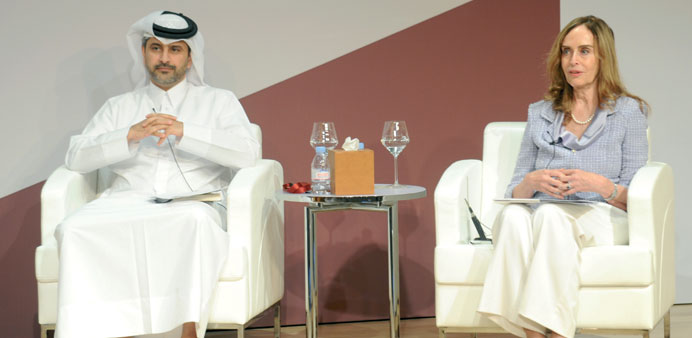
EAA executive committee member Mohamed Abdulaziz al-Naimi stated that the participants were committed to the cause and highlighted the need to scale up the existing programmes.
“Providing access to schooling is not enough, there is a need for quality education to improve retention at school,” he observed while reflecting on the deliberations at the meeting, described by Sheikha Moza as a continuation of what began at the Unesco meeting in Paris six months ago, and in Washington in April.
“We do have sufficient information to move forward,” asserted by EAC director Dr Mary Joy Pigozzi. She recounted that Unesco and Unicef officials pointed out the availability of tools which
have been tested in many countries.
“These tools will strengthen national data collection and help to take our work forward. The consensus at the meeting has been to focus on programme development and knowledge creation, adapt and apply what is known, but not reinventing the wheel, and combining all the pieces. We hope the monitoring and evaluation piece will pull all the other pieces together,” she said.
The meeting looked at some of the benefits of education, including the social, political, psycho-social, and environmental impacts and reiterated that education breaks the cycle of poverty and is a key ingredient to development.
“Not providing primary education costs poor countries multiple years of economic growth, it could result in a loss of GDP of up to 7%,” Pigozzi added.
Al-Naimi observed that the participants agreed that governments should have a strong role in implementing solutions in the face of increasing population, global
urbanisation and pervasive poverty.
“We have a range of potential ideas. We are looking forward to work with the partners,” he added while stressing the significance of new approaches, locally relevant solutions and creative combinations.
Speaking at the opening of the HLSM on Monday, Sheikha Moza had announced that EAC, which has succeeded in providing quality schooling to 600,000 children over a period of just four months, is aimed at reaching 10mn children by the end of 2015.
“The EAC programme is inspired by the Millennium Development Goals, which have been agreed at a global level, seeking to enable all children to access primary schooling by 2015,” she explained. Page
EAC is targeting 34 countries, which represent more than 70% of the 61mn children who are out of school. Page 12