


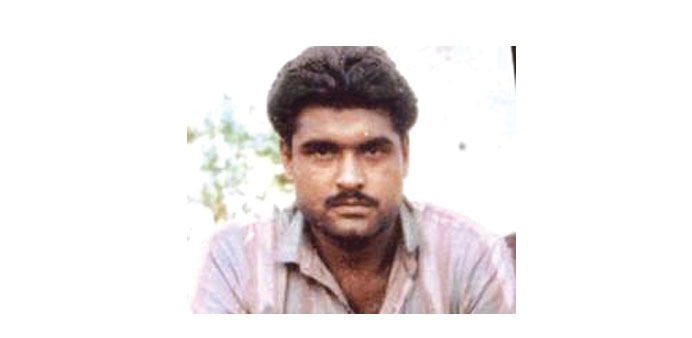
The distraught family of death row prisoner Sarabjit Singh, who was brutally assaulted in a Lahore jail last week, is likely to return home today after doctors reportedly indicated that he was “clinically dead.”
Raj Kumar Verka, vice chairman of the National Commission for the Scheduled Castes, said in Amritsar yesterday that he spoke to Singh’s sister Dalbir Kaur who told him that doctors have told her that he was “brain dead.”
“I think that Sarabjit had died earlier. Why did the Pakistan government have to do this drama (of allowing the family to visit him in Lahore) when he was already gone? They sought her permission to remove him from the ventilator,” Verka, who was instrumental in securing visas for four members of Singh’s family from the Pakistan High Commission in New Delhi on Saturday, said.
Singh’s lawyer Awais Sheikh told a news channel from Lahore that the prisoner’s sister had expressed the family’s desire to return to India.
“After the doctors told her about Sarabjit’s condition, she first told me that they wanted to go back today. But later, in their hotel, they said that they will go back tomorrow morning,” Sheikh told the channel.
Singh, 49, was admitted to the hospital in a critical condition after a vicious attack on him by fellow prisoners at the Kot Lakhpat Jail on April 26. He has been on ventilator support ever since.
India on Monday appealed to Pakistan for Singh’s release even while a medical board in Pakistan said he would continue to get treatment in Pakistan and not be shifted out.
The ministry of external affairs in New Delhi had asked Pakistan to take a “sympathetic and humanitarian” view on Singh.
Kaur, Singh’s wife Sukhpreet Kaur and daughters Swapandeep and Poonam, crossed from the Attari-Wagah border checkpost into Pakistan on Sunday afternoon to visit him in the hospital.
He has been on death row in Pakistan since 1990 after being convicted by courts for bomb blasts in Lahore and Multan, which left 14 people dead.
Singh’s family claims he is innocent, and that he crossed over to Pakistan in August 1990 in an inebriated state and was arrested there. Police in Pakistan, however, claimed that Singh, known there as Manjit Singh, was involved in terrorist strikes.
A leading Pakistani newspaper asked why Singh was not considered a prisoner at risk, and demanded that the attackers be brought to justice.
“It’s a case of the syndrome from which Pakistan is frequently found to suffer: not taking care when time and then they are trying to patch up matters when they have gone wrong,” said an editorial in the Dawn.
Police officials have said two prisoners were interrogated. The daily hoped that “even without the victim’s statement the investigation is pursued with all seriousness and that the persons responsible are identified and punished.”
“Indeed, conditions in Pakistani jails are deplorable to say the least. Overcrowding frequently means that petty offenders are made to share the same space with hardened criminals and are thus at risk. Moreover, the smuggling in of arms adds to the danger of jail brawls and attacks on other prisoners. This is an issue that needs to be addressed as part of the overall reform of jails,” the editorial added.
In New Delhi, opposition leader Sushma Swaraj slammed the government for not dealing with Islamabad “firmly”.
“Whatever happened with Sarabjit in Pakistan, India has not talked as firmly with them as we should have,” she said.
“This is not an isolated incident; even when they beheaded our soldiers, our minister invited their prime minister for lunch in Ajmer,” she said, referring to the lunch in Jaipur hosted by External Affairs Minister Salman Khurshid for Pakistan Prime Minister Raja Pervez Ashraf in March.
“When we offered them (Mumbai attack convict) Ajmal Kasab’s body, they refused to accept it, and then they passed a resolution on why (parliament attack convict) Afzal Guru’s body was not handed over...” she added.