


A parliamentary panel report yesterday urged the scrapping of “illegal” allocations of coal mines between 1993 and 2010 to private firms, creating fresh uncertainty in the key energy sector.
The report added fuel to an ongoing row, dubbed “Coalgate” by the media, over allocation without competitive bidding of coal resources on which Asia’s third-largest economy relies to meet over half of its vast energy needs.
The conclusions of the Standing Committee on Coal and Steel, a permanent legislative panel, triggered uproar in parliament and opposition calls for the resignation of Prime Minister Manmohan Singh.
Singh, 80, in addition to his job as premier of the Congress government, served as coal minister from 2004-2009.
The committee report said the coal blocks awarded between 1993 and 2010 were distributed in a “most non-transparent” manner to a “few fortunates” through “abuse of power.”
“All blocks allotted to private companies, at least where coal production has not started, should be cancelled immediately,” the committee added, urging “penal steps” be taken against those involved in the allocations.
The period examined spanned the rule of the opposition Bharatiya Janata Party and the current Congress-led government, which has been rocked by corruption scandals throughout its second term.
The “illegal” allocations caused huge losses to the exchequer, the committee said, although it was unable to estimate the sum lost as the coal ministry could give no information about the value of the mines.
The findings echoed those of the Comptroller and Auditor General last year who said the Congress government gave away $33bn in windfall benefits to firms to extract coal.
The row paralysed parliament for days amid charges of “crony capitalism” and allegations some of the companies which won coal blocks lied about their abilities to extract coal or had political ties.
In 1973, India nationalised its coal industry and created state-run giant Coal India. Then in 1993 it allowed private firms to mine coal for their own use when state output could not supply demand.
But “out of 195 coal blocks allocated so far for captive mining, 30 blocks have started coal production and out of 160 captive coal blocks allocated during 2004 to 2008, only two have started production,” the standing committee said.
The biggest surge in captive coal field allocations came under Singh’s watch.
After the national auditor’s report last year, the government ordered a probe into the allocations by the Central Bureau of Investigation (CBI).
But the CBI’s soon-to-be-released report has also become mired in controversy amid allegations - denied by the government - that Law Minister Ashwini Kumar vetted the document and sought to have its findings toned down.
The government has insisted Kumar was only making “grammatical corrections,” according to the Press Trust of India news agency.
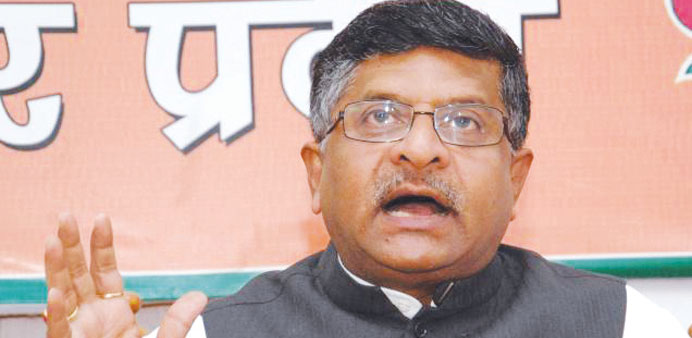
“This is the first time the CBI needed tutorship of the law minister,” BJP leader Ravi Shankar Prasad said yesterday.
“The BJP parliamentary party has decided that the prime minister should resign and the law minister should be removed in the light of the series of scams and the brazen way in which the government has sought to suppress the truth from coming out,” Prasad said.
Congress chief Sonia Gandhi rebuffed the BJP’s demand.
“Let them ask,” Gandhi told reporters.
Gandhi also met the prime minister, along with senior cabinet ministers, before the report was tabled in the Lok Sabha, the lower house of parliament.
The Communist Party of India (CPI) too demanded Singh’s resignation, saying he had not done his job and was guilty of “dereliction of duty.”
“The prime minister should resign,” CPI leader Gurudas Dasgupta said.
Parliamentary Affairs Minister Kamal Nath rejected the demand.
“There is no basis to the demand for the PM’s resignation,” he said.
However, Samajwadi Party (SP) chief Mulayam Singh Yadav supported the government, saying his party did not believe that the government has interfered with the CBI report.
The SP chief also said the coal block allocation scam was not the most important issue faced by the nation.