


To mark World No Tobacco Day (WNTD), which is organised on May 31 each year by the World Health Organisation (WHO) Tobacco Free Initiative, public sector health professionals in Qatar are to take part in activities to encourage people to stop using tobacco products.

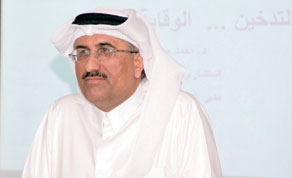
Dr Ahmad al-Mulla, head of the smoking cessation clinic at HMC
Extensive research has proven that regular tobacco use commonly leads to diseases affecting the heart and lungs, with smoking being a major risk factor for heart attacks, strokes, chronic obstructive pulmonary disease (COPD), and cancer (particularly lung cancer, cancers of the larynx and mouth, and pancreatic cancer).
This year, health professionals from Supreme Council of Health (SCH), Hamad Medical Corporation (HMC) and Primary Health Care Corporation (PHCC), have increased their efforts to persuade people to quit smoking by warning about the dangers of not just cigarette but also shisha smoking as well as chewing “sweeka”, a type of local chewing tobacco used by many young people.
Dr Ahmad al-Mulla, head of the smoking cessation clinic at HMC, said: “Studies have shown that tobacco is a leading cause of preventable death globally and the effects of tobacco related illnesses place a great burden on healthcare services.”
Some less known facts about the harmful effects of nicotine include male smokers being more likely to suffer from impotence compared to non-smokers. Nicotine is also a significant factor in miscarriages among pregnant smokers, and contributes to other threats to the health of the foetus such as premature births and low birth weight.
When tobacco is smoked, the nicotine (which is a highly addictive psychoactive drug) in the tobacco causes physical dependency; which makes it more difficult for many smokers to quit the habit.
The smoking cessation clinic has developed many programmes to provide support and counseling for patients who wish to give up smoking. Nicotine replacement therapy using nicotine patches is one of several other options offered to patients.
“At the smoking cessation clinic at HMC, we receive many patients who come to us for help in dealing with their nicotine addiction. We focus not only on cigarettes but also on other ways of using tobacco that are prevalent in the Middle East, such as Shisha. Smoking shisha leads to more nicotine intake in the body and typically smoking one shisha is equated with smoking one pack of cigarettes, so it is important for us to deal with this issue,” added Dr al-Mulla.
Staff from the smoking cessation clinic at Hamad General Hospital advice visitors about how to stop smoking. CO levels will also be measured. Visitors are also able to get their blood pressure, blood sugar, height and weight checked while seeking advice from health professionals.
As part of its social responsibility mandate, the smoking cessation clinic at HMC also conducts informative talks on a regular basis in schools and to employees of companies.