


Reuters/Paris/New Delhi
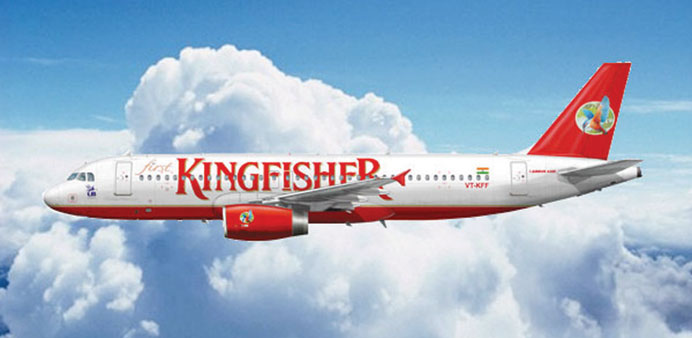
Indian airports have claimed international law must take a back seat to local courts in a row with foreign aircraft leasing firms over the future of grounded Kingfisher Airlines jets, according to government minutes.
The stance taken by Mumbai and Delhi airports could further complicate the leasing firms’ attempts to recover jets supplied to Kingfisher, as other creditors also try to recoup some of the $2.5bn of debt left when the airline, set up by liquor baron Vijay Mallya, halted flights in October.
That in turn could affect leasing firms’ willingness to deal with Indian airlines in future, or at least make financing for local carriers more expensive, aviation analysts said.
Aircraft leasing firms like ILFC are at the heart of the $100bn-a-year passenger jet industry. Their role has grown dramatically as cash-pinched airlines try to contain their capital spending, and experts say lessors now account for about 40% of the modern jetliner fleet.
An international treaty aimed at making it attractive for leasing firms to invest offers lessors similar rights to repossess unpaid jets as in the US.
The treaty, the Cape Town Convention, is a key part of efforts to harmonise trade with developing countries that now dominate demand for Airbus or Boeing planes.
However, efforts by foreign lessors to repossess over a dozen Airbus jets parked at airports around India have been hampered by disputes over competing claims and confusion over the power of international agreements to trump local courts.
Both lessors and airports are owed money by Kingfisher, along with staff, tax authorities and other creditors. Lessors say the jets do not belong to Kingfisher and can’t be touched.
At the March 26 meeting attended by airport officials, as well as government and tax authorities, it was agreed that jets already de-registered by India must be released, according to minutes of the gathering held at the aviation ministry.
“The concerned airport operators shall release all the de-registered aircraft to the respective owners/lessors immediately so that these aircraft can fly out of the country,” the document said.
Despite this, lessors led by US-based ILFC have so far said most of the jets leased to Kingfisher remain stranded.
The chairman of Airports Authority of India, V P Agrawal, sought to defuse the row by announcing after the meeting that India is bound by international convention to let the planes go.
However, representatives of Mumbai and Delhi airports argued inside the talks that Indian laws prevailed over international laws, which meant they could not ignore a “stay” or freeze order from the Delhi High Court, according to the minutes.
Officials at the airports could not be reached for comment. ILFC declined to comment.
Bertrand Grabowski, a member of the board of managing directors at Germany’s DVB, a leading transport lender, said it was not clear that the international treaty would be upheld. “Some of us, including DVB, are still sceptical that the Cape Town Convention will completely change the situation in India because courts tend to read the law so that Indian law prevails,” he said.
“We will need a few more months to evaluate carefully the situation.”