


AFP/Bangui
Central African Republic’s transitional council, charged with carrying out parliament’s responsibilities after a coup last month, has chosen a president to oversee its work, parliament’s press service told AFP yesterday.
Former MP and opposition leader Alexandre-Ferdinand Nguendet, who is relatively unknown on the political scene, will head the 105-member body.
The RPR opposition party that Nguendet founded at the start of this year was the first to recognise the authority of Seleka rebel leader Michel Djotodia, who took power in a coup on March 24, which ousted then-president Francois Bozize.
Djotodia was named Central African Republic’s interim president for an 18-month period by the council at the weekend.
The transitional council was created after the six-nation Economic Community of Central African States bloc pushed for a body to take charge of the post-coup political transition in the notoriously unstable and impoverished nation.
It will act as a constituent assembly and take on legislative responsibilities normally carried out by parliament, and is to include members from across the political spectrum as well as union, judicial and religious figures.
Meanwhile, South Africa’s Nobel literature prize winner Nadine Gordimer yesterday urged South Africa’s government to be more cautious about deploying peacekeepers abroad, after 13 troops died in the Central African Republic.
Gordimer told AFP the deaths of soldiers in the remote Saharan nation were “very, very troubling,” and should raise questions about the imminent deployment of more troops to the Democratic Republic of Congo.
“It seems in the Central African Republic we have blundered rather badly,” the 1991 laureate said.
“And now it’s the Congo. There is a lot of talk about this and indeed a great deal of disagreement.”
At least 13 South African troops died and 27 were wounded on March 23 when they came under fire from rebel fighters near Bangui.
President Jacob Zuma has since faced thorny questions about why the troops were there, amid accusations of dodgy deals with ousted president Francois Bozize.
The government has vehemently denied any wrongdoing.
“That role in the Central African Republic is very, very troubling and it’s very difficult to understand,” the 89-year-old Gordimer said from her Johannesburg home.
Gordimer said it was “wonderful” that South Africa was willing to help solve African crises, but cautioned the government against getting in out of its depth.
“It now brings a kind of obligation,” she said. “You may indeed (be) helping to support the wrong side - in some cases the government is the wrong side and the other cases, it’s the rebels.”
In coming weeks, South Africa will deploy to the restive eastern Congo, part of a UN force that will, for the first time, have a mandate to conduct offensive operations.
“It seems, morally, that we should not send our troops to kill when we are not quite sure what it’s all about,” said Gordimer.
South Africa will muster, along with Tanzania and Malawi, a UN brigade to fight armed groups in the mineral-rich region gripped by conflict for more than two decades.
The M23 rebels have urged the South African parliament to not contribute troops to the brigade, and warned that they would retaliate if attacked by the UN peacekeeping brigade.
Throughout her literary career Gordimer has been a powerful voice in South African public life, at first as a member of the now-ruling ANC and as an anti-apartheid activist.
She had several works banned by the apartheid regime.
Last year she was deeply critical of police violence that killed 34 striking miners and the government’s failure to tackle inequalities.
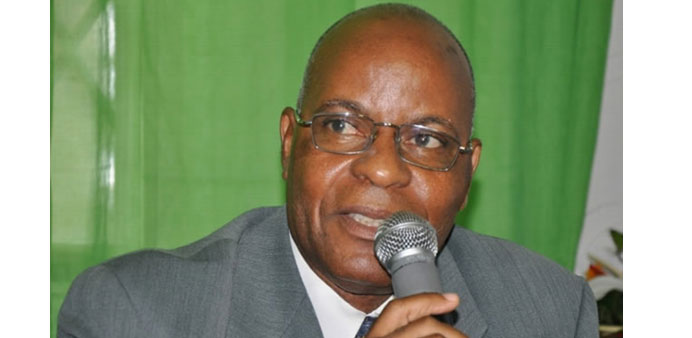
Alexandre-Ferdinand Nguendet