


|
|
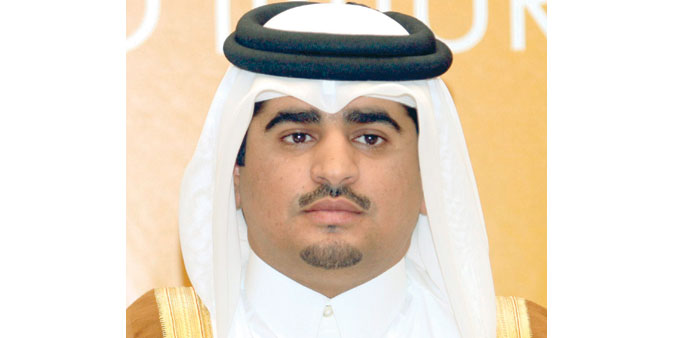
Qatar is seeking the co-operation of international organisations for the establishment of a national programme for licensing healthcare facilities which is one of the objectives of the National Health Strategy (2011-2016) expected to be achieved by 2015, HE the Minister of Public Health Abdullah bin Khalid al-Qahtani said yesterday.
HE al-Qahtani was addressing the opening session of a two-day conference on ‘Healthcare Quality and Patient Safety: Partnering for a Healthier Population and Safer Care’ being held at the Ritz.
While maintaining that Qatar is keen on achieving more accreditation, the minister recalled that the Hamad Medical Corporation, which is the largest healthcare institution in the country, has been accredited by the Joint Commission International in 2011.
He noted that the primary healthcare corporation was also about to get accreditation from the Accreditation Canada. He added that four hospitals within the private health sector are also seeking international accreditation.
“In order to establish the principle of partnership in the field of health, the State of Qatar is keen on continuing co-operation with the World Health Organisation. Perhaps the most prominent form of this co-operation is the approval of the WHO on the request made by Qatar to add the item “patient safety” on the agenda of the World Health Assembly 66th session scheduled to be held in May,” the minister noted.
He explained that Qatar appreciates the importance of the conference for being a melting pot of international partners, who will share experiences and successes with the challenges of improving healthcare services in the country and create access to the highest levels of quality and patient safety.
“With this in mind, we hope that this conference will achieve results and multiple objectives including: to focus on various practical situations, and the successes and challenges faced by the international experts when applying the best practices of the quality of healthcare services and patient safety; to strengthen relations with international partners in relation to the areas of quality and patient safety at the regional and international level; and to give access to the best international standards in the field of healthcare practice and patient safety and to maintain these levels as the cornerstone of the pillars of lasting success and ongoing national health strategy”.
HE al-Qahtani mentioned that the quality of healthcare will not be complete unless the integrated project for health insurance for everyone was implemented.
“The State of Qatar has amassed - and still is - the financial and human resources needed for this project. The project will benefit from health insurance for all citizens and residents of the state, so that everyone can get high quality health services at a reasonable cost,” he claimed.
Speaking about the conference, Accreditation Canada International chief executive officer Sebastien Audette said accreditation is not an end in itself.
“Accreditation is really a tool, a blueprint of how facilities want to manage their services…what the primary care is going to look like in three-four year’s time,” he explained.
“Accreditation of primary healthcare is an emerging field and there has been a lot of focus on accreditation on general practitioners’ credentials and as group practice are coming together to create bigger infrastructures, they integrate laboratory and diagnostic imagery and pharmacy services into this,” he said.
He maintained that Accreditation Canada International is not a regulatory body but a volunteer programme that organisations look forward to.
“What we do is to really provide organisation with that vision of evidence that they need to meet if they have a perfect system that is patient- and clients-centred; that is safe and provide equity in terms of how services are accessed; where staff or employees feel valued and don’t feel over-worked (and that minimises errors); and it focuses on the population by looking at common diseases among them.
Audette said further: “Our approach is to provide applicant for accreditation with the tools and standards they need to follow and our programme is a step-to-step approach by which we identify high priorities by putting grades…it’s actually a road map,” he said.
According to him, attendees from some 25 countries including Europe, Latin America, Asia-Pacific, Australia, Canada and Britain, are taking part in the conference being held outside of Canada for the first time.
“We have found a lot of support from the SCH, HMC, PHCC and private hospitals as well and the calibre of participants in the conference gives a lot of exposure to the healthcare organisations here,” he said.
Highlights of the conference include sessions on governance system, leadership, patient safety, continuing primary care, healthcare quality in general.
HMC to host quality improvement forum
The first Middle East Forum on Quality Improvement in Healthcare in Qatar, will be jointly held by Hamad Medical Corporation and the Institute for Health Care Improvement at the Qatar National Convention Centre from May 17-19.
This first-of-its-kind event in the Middle East will provide easier access to the Institute for Healthcare Improvement’s (IHI) methodology and expertise to many healthcare professionals living and working in Qatar and the Arab world.
Doctors, nurses and allied healthcare professionals are expected to learn about the latest best-practice to drive new insights into the delivery of safer and more effective patient care in Qatar and the region, during the event, which is a collaboration between Hamad Medical Corporation (HMC) and IHI.
“HMC’s collaboration with the IHI will enable our staff and other forum delegates to tap into the rich resources available through expert training sessions,” Medical Education department’s Medical, Academic and Research Affairs deputy chief Dr Abdullatif al-Khal said adding: “These will play a focal role in supporting HMC’s drive for excellence in healthcare service and quality and patients’ safety as outlined in Qatar’s National Vision 2030 and will serve the specific pillar of maintaining a comprehensive world-class healthcare system for the country’s growing population.”
A series of workshops (described by the IHI as Learning Labs), lectures and keynote speeches will give delegates practical tools designed to support efforts to raise the healthcare standards in their own health organisation.
Attendees will learn how best to develop and enhance a culture of safety and innovation in their organisation.
Topics to be discussed at the event include learning about transforming care at the bedside, reducing avoidable hospital readmissions, identifying areas for improvements in Intensive Care Unit (ICU) care, and measuring data for improvement.
Additional topics that are highly relevant to the region include fighting the obesity epidemic and diabetes care, in addition to several other important topics.
“The international best practice in healthcare shared at the forum will help HMC to further promote the delivery of safe, effective, evidence-based care, ” Academic and Research Affairs acting chief of Medical professor Michael Richmond said adding: “Sharing such knowledge and expertise with other healthcare professionals will support the continued delivery of compassionate, high quality care to meet the needs of our patients and their families.”
Healthcare professionals who complete the registration formalities before April 30 will benefit from reduced fees.
Registration for the event can be made online at http://ihi.hamad.qa