


The Independent/London
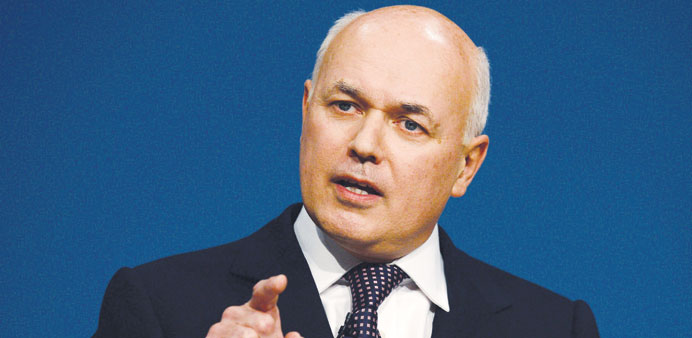
Iain Duncan Smith dismissed demands for him to try to make ends meet on £53 a week as a “complete stunt” and insisted he had experienced life “on the breadline” as ministers confronted their critics over wider-ranging cuts to benefits.
The work and pensions secretary was backed by the Chancellor George Osborne in arguing that welfare reforms were essential to helping recipients back into work and tackling Britain’s previously burgeoning benefits bill.
Almost 300,000 people have signed an online petition challenging Duncan Smith to survive on £53 a week, or £7.57 a day, after he insisted he could “if I had to”.
It was set up when David Bennett, a market trader, told BBC Radio 4 that the sum was all he had to live on after his housing benefit was cut - and Duncan Smith responded by claiming he could manage on that amount.
But the work and pensions secretary told his local newspaper: “This is a complete stunt which distracts attention from the welfare reforms which are much more important and which I have been working hard to get done. I have been unemployed twice in my life so I have already done this. I know what it is like to live on the breadline.”
Both Downing Street, on behalf of David Cameron, and Osborne sidestepped questions on their ability to cope on such an income.
But Greg Clark, the Treasury minister, admitted that any politician would find it difficult to live on £53 a week. “I think it’s an incredible struggle to do that and I think any MP, anyone earning the comfortable wage that an MP has would certainly struggle.
“I think the context is this - we’re all having to tighten our belts…right across the board there are difficult choices to be made, it is an incredibly difficult situation,” he told BBC Radio 5Live.
The row began as cuts to benefits came into force this week. They include reductions of up to 25% in housing benefit payments if recipients are deemed to have spare rooms - the so-called “bedroom tax” - and below-inflation increases in benefit rates.
Disability living allowance is being replaced by the personal independence payment, while trials are due to begin in four London boroughs of a £500-a-week cap on household benefits.
The first pilot of the new Universal Credit system also begins this month.
In a speech in Kent on Tuesday, Osborne said the welfare system was “fundamentally broken” and hit out at critics of the government’s plans, who include church leaders and charities, accusing them of talking “ill-informed rubbish”.
Arguing that ministers were simply trying to restore “some common sense and control on costs” on spending, he said that by the year 2010 an “unaffordable” one pound in seven paid in tax was being spent on working age benefits.
The chancellor said the changes were “all about making sure that we use every penny we can to back hard working people who want to get on in life”.
He also mounted a fierce defence of his decision to lower the top rate of tax from 50p to 45p, asserting that it was “essential” to help get the economy growing. The reduction comes into effect on Saturday.
Acknowledging the move was “controversial”, he said: “In a modern global economy, where people can move anywhere in the world, we cannot have a top rate of tax that discourages people from living here, setting up businesses here, investing here, creating jobs here.”
The chancellor cited France, where the government is planning to “whack up their top rate of tax” and job creation rates were falling.
“The opposite is happening here because we are welcoming entrepreneurs and wealth creators - and the jobs they bring with them,” he said. Osborne said the 50p rate - brought by Labour weeks before the election in 2010 was a “con” as amounts of tax collected fell.
“We got the worst of both worlds: a tax rate that discouraged enterprise and didn’t raise more money from the rich. You can’t pay down the deficit with that.”