


Reuters/New York
Toyota Motor Corp’s top North American executive has voiced optimism about the US economy and said demand in the industry this year would be driven by the need for consumers to replace aging cars and trucks.
Jim Lentz, newly-appointed chief executive of North America, said the Japanese auto maker sees US industry new-car sales hitting 15.3mn this year, up from 14.5mn in 2012. Just six months ago, its 2013 forecast was for 14.7mn, but the company at the time believed talk of the fiscal cliff’s impact would dampen the economy.
“We’re cautiously optimistic about a growing economy, but there’s still a lot of uncertainty that can derail the consumer’s attitude,” Lentz said in an interview after the New York Auto Show.
Offsetting his concerns were the improving mood of consumers, which is being reflected in a stronger housing market and rising stock market, and the need for people to replace cars and trucks, the average age of which has reached an all-time high in the US of more than 11 years.
“When people can look at their 401ks and see that not only have they not fallen, but they are now starting to gain ... that is a real positive to overall consumer confidence,” Lentz said.
Toyota should sell about 2.2mn cars and trucks under its three brands — Toyota, Lexus and Scion — this year, up from 2.08mn in 2012. The company is introducing nine new or updated vehicles this year.
Auto makers are scheduled to report March US sales on Tuesday and Lentz said Toyota expects the industry’s annual sales rate to finish at about 15.4mn vehicles. That would mark the fifth straight month above the 15mn rate.
However, Toyota has no plans to revisit its full-year estimate at this point as Lentz said the company is forecasting the sales rate to slow to a range of 15.1mn to 15.2mn in the second quarter.
Lentz said a tightening of interest rates by the US Federal Reserve would have a minimal impact this year and in 2014 on consumers, many of whom have monthly car payments.
“Whether you lease or whether you borrow money to buy a car, it’s still all about the monthly payment,” he said. “Right now, if you look at car payments relative to income, cars have probably never been cheaper even though the price of cars continues to go up. That monthly payment is still very fixed.”
However, Lentz agreed that the high residual values that auto makers are setting on their leased vehicles is not sustainable. He said Toyota is already adjusting its residual values going forward.
“In 2014-2015, this low, low lease party will come to an end,” he said.
Toyota shares closed down 46 cents at $102.64 on the New York Stock Exchange on Thursday.
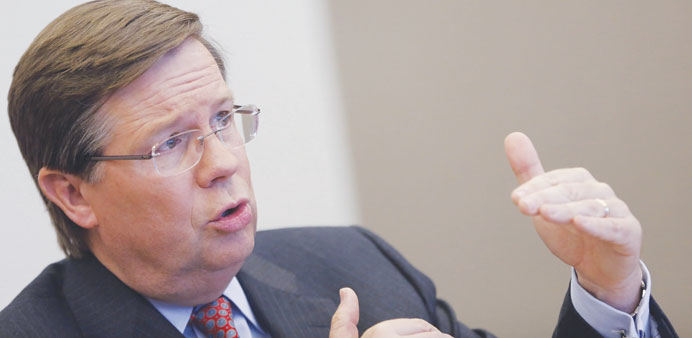
Lentz: ‘We’re cautiously optimistic about a growing economy, but there’s still a lot of uncertainty that can derail the consumer’s attitude.’