


Reuters/Sofia
Bulgarian nationalist party Attack is gaining support among voters with pledges to nationalise companies and raise wages while blaming foreigners for unsatisfying living standards, its leader told Reuters on Tuesday.
Attack party leader Volen Siderov blamed the “colonial” West for low wages and high prices in Bulgaria, which joined the European Union in 2007 and has committed to budget restrictions and a currency peg in an effort to swap its lev for the single European currency used by 17 other EU member nations.
“I want to underline the negative role of the West, which through all these years of colonising was actually pushing things in that direction – low incomes, cheap labour because foreigners benefit from it,” Siderov said in an interview.
The Attack party’s growing popularity, now about 5%, is raising questions over the political future of the poorest EU member ahead of a May 12 election where grudging support for Bulgaria’s main parties looks likely to end in a hung parliament.
Public anger at consumer prices charged by energy monopolies led to widespread protests last month over Bulgaria’s low standard of living and forced the resignation of the centre-right cabinet headed by Boiko Borisov.
“Protesters said: ‘Let’s get Bulgaria back, let’s get our property back’ and this is our slogan I have here on my badge,” said the 57-year-old Siderov, whose party also has an anti-Roma and anti-Turkish agenda.
Bulgaria’s two leading political parties, Borisov’s GERB and the Socialists each have the support of about 20% of voters and there appear few likely combinations for a coalition after the election.
Both GERB and the fifth-largest party, the pro-business Bulgaria for the Citizens, have indicated they will not work with any other group and the Attack party’s surge in popularity to 5% from 1% after the protests has complicated the picture.
The most likely coalition combination would be the Socialists and an ethnic Turkish party, but it is unlikely they could command a majority on their own.
While Siderov’s party is unlikely to have a major say over policy, its rising popularity in the country of 7.3mn may alarm investors, given Bulgaria needs to keep a tight rein on fiscal policy to hang onto its eurozone aspirations.
The Attack party informally supported Borisov’s government, but is now pushing an agenda which GERB cannot support.
“Siderov is not a welcome coalition partner, as fierce people very easily forget their pledges,” said Rumiana Kolarova, a political analyst at Sofia University. “The bigger support for him, the bigger the uncertainty.”
The Attack party wants to nationalise energy distributors, raise taxes against the rich and revoke concessions for gold and water granted to foreign companies, which Siderov says boost profits by underpaying their Bulgarian staff.
Seeking to quell public anger, the energy regulator has cut power prices by 7% and has begun a process to revoke the licence of Czech CEZ, which provides electricity to 1.7mn clients in western Bulgaria.
Other distributors include Czech Energo-Pro and Austria’s EVN, which said on Tuesday it would take Bulgaria to court if it fails to reach an agreement over electricity costs.
In a powerful demonstration of public despair over Bulgarian living standards which stand at less than half the EU average, a 41-year-old man set himself on fire yesterday, becoming the sixth person to protest in this way against the poverty and suspected corruption that has brought down the government.
National radio BNR did not name the man from a village near the Danube River town of Silistra but said he was jobless, had one child and had been moved to a hospital in the Black Sea city of Varna, where he was in a critical condition.
People in the country of 7.3mn earn an average monthly wage of 400 euros ($520) and pensions of less than half that.
“I am fed up, there is no bread and I cannot stand it anymore,” the man told doctors at his local hospital, the radio quoted Daniela Kostadinova, the head of the hospital in Silistra as saying.
The latest self-immolation happened only two days after a 59-year-old man set himself on fire in protest in the western town of Bobovdol.
Three men have died after setting themselves on fire and the others remain in a serious condition in hospital.
Last week, interim Prime Minister Marin Raikov pledged to improve the incomes of pensioners and the poorest while maintaining a strict fiscal policy.
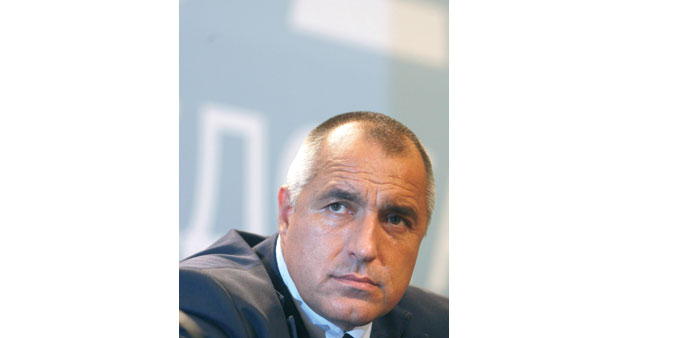
Borisov: brought down by electricity costs