


|
|
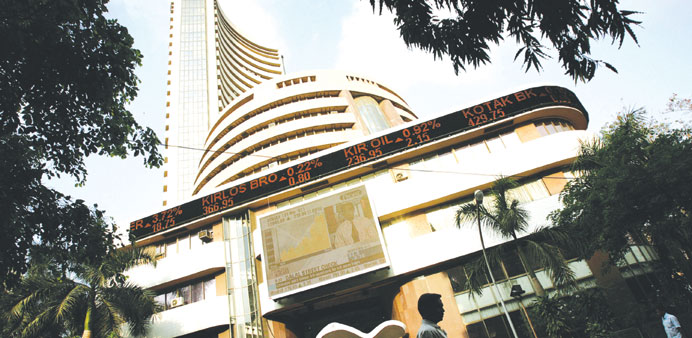
India’s benchmark stock index had the longest losing run in more than five weeks amid concern the withdrawal of the government’s biggest partner from the ruling alliance may jeopardise economic reforms.
The S&P BSE Sensex dropped for the fourth day, losing 0.7% to 18,884.19 at close in Mumbai, the longest stretch of losses since February 11. Volumes were 24% higher than the 30-day average. ICICI Bank, India’s third-largest lender by value, fell to a six-month low. Oil & Natural Gas Corp, the nation’s biggest explorer, retreated to a two-month low.
The former largest ally of Prime Minister Manmohan Singh ruled out a patch-up after it quit the coalition over policy toward war crimes in Sri Lanka. Dravida Munnetra Kazhagam’s exit has left Singh 44 seats short of the halfway mark in the lower house of parliament and more reliant on regional parties outside the alliance to win the passage of legislation.
“The market believes the reforms agenda will temporarily be put on the back burner and the government’s focus will possibly return to self-preservation,” Manishi Raychaudhuri, head of Indian equity research at BNP Paribas Securities (Asia), told Bloomberg TV India yesterday.
ICICI Bank sank 3% to Rs1,001.55, the lowest close since September 13. HDFC Bank, India’s largest lender by value, slid 1% to Rs625.5. State Bank of India, the biggest by assets, lost 3.8% to Rs2,120.4. The S&P BSE Bankex lost 2.1% to close below its 200-day average for the first time since September 5.
ICICI Bank, HDFC Bank and Axis Bank were involved in money laundering, news website Cobrapost reported last week. ICICI Bank on March 16 suspended 18 staff members and HDFC Bank hired Deloitte Touche Tohmatsu India to probe the report. The Reserve Bank of India is collecting information on the report, Deputy Governor Urjit Patel said March 14.
“There’s concern greater Reserve Bank scrutiny on private banks will lead to more restrictions on lending,” A K Prabhakar, senior vice-president of equity research at Anand Rathi Financial Services in Mumbai, said by e-mail.
Oil & Natural Gas Corp, the nation’s biggest explorer, retreated 2.9% to Rs300.8, the lowest since January 11. Mahindra & Mahindra fell 0.6% to Rs873.4. Utility NTPC dropped 3.4% to Rs139.35, the lowest close since November 2008.
Singh is battling to refocus the government ahead of an election next year, ending two years of criticism over alleged corruption and a slowing economy. India’s economy will grow at 5% this fiscal year, the slowest in a decade. Bills to boost foreign investment in pensions and insurance are among those the government wants to pass.
The Sensex also fell Tuesday after the Reserve Bank of India pared the benchmark repurchase rate to 7.5% from 7.75% and said inflation and the current-account deficit limit the scope for further monetary easing. The government is trying to contain the budget shortfall to damp price pressures.
The stock gauge has retreated 2.8% this year, the worst-performing benchmark index in Asia after Malaysia. The gauge trades at 12.8 times projected 12-month profits, compared with the MSCI Emerging Markets Index’s 10.5 times.
Overseas funds bought a net $27mn of local stocks on March 19, data from the regulator show. Foreign investors have purchased a net $9.81bn of local equities this year, a record for the period, data compiled by Bloomberg show.
The 50-stock CNX Nifty Index retreated 0.9% to 5,694.40 and its March futures settled at 5,724. The India VIX, the benchmark measure for options prices, fell 0.3%.
Meanwhile, India’s rupee touched a two-week low after DMK quit the coalition.
The central bank cut the repurchase rate by 25 basis points to 7.50% yesterday and said inflation and the current-account deficit limit the scope for further monetary easing.
“It is very much a choice between a rock and a hard place for the rupee now,” said Andy Ji, a foreign-exchange strategist in Singapore at Commonwealth Bank of Australia. “There will be constant fear in the market now about how policies are going to be implemented, and there are also macro risks of inflation and the current-account deficit.”
The rupee was little changed at 54.3675 per dollar in Mumbai, according to data compiled by Bloomberg. It touched 54.565 earlier, the lowest level since March 7, and has declined 0.6% this week. One-month implied volatility in the rupee, a measure of expected moves in the exchange rate used to price options, rose 8 basis points, or 0.08 percentage point, to 9.26%.
The economy expanded 4.5% in the three months through December, the slowest pace since 2009, official data show.
The rupee has appreciated 1.9% versus the dollar since the changes began on September 13. It remains down 7.3% in the past 12 months.