


Agencies/Beirut
Syria’s regime is expanding its use of cluster munitions in its conflict with rebel forces, causing “mounting civilian causalities,” Human Rights Watch (HRW) warned yesterday.
“Syria is expanding its relentless use of cluster munitions, a banned weapon, and civilians are paying the price with their lives and limbs,” Steve Goose, director of HRW’s arms division, said in a statement.
The watchdog said it had identified at least 119 places across Syria where at least 156 cluster bombs have been used in the past six months, including two attacks in the last two weeks that killed 11 civilians and injured 27 others.
“The initial toll is only the beginning because cluster munitions often leave unexploded bomblets that kill and maim long afterward,” Goose added.
The New York-based rights group said its data was collected from field investigations and analysis of videos posted online by activists. It said it had documented government use of cluster munitions, but had no evidence rebels were using them.
Syria is not party to the Convention on Cluster Munitions, which restricts use of the weapons, but HRW urged signatory nations to speak out against the regime’s use of the munitions.
“All nations that have joined the treaty banning cluster bombs have a legal obligation to speak out and condemn Syria’s ever-expanding use of these indiscriminate weapons, yet too few are doing so,” Goose said.
The statement came as Syria’s civil war, which began with peaceful anti-government demonstrations in March 2011, entered its third year. The conflict has killed at least 70,000 people, and forced more than 1mn Syrians to seek refuge abroad. Millions more have been internally displaced.
Meanwhile, Syrian regime forces yesterday pounded parts of Damascus during the night, sending residents fleeing from the northern Barzeh district, as fighting also raged in the northern city of Aleppo. The Syrian Observatory said regime shelling also affected the Palestinian Yarmuk refugee camp along with the Jubar, Barzeh and Qaboon neighbourhoods of Damascus.
The shelling was particularly fierce in Barzeh, the watchdog said, adding that snipers were deployed in the district as residents were reported fleeing the area.
Fighting also raged in the northern city of Aleppo, with at least 12 rebels reported killed amid clashes with regime troops near the international airport.
The Syrian Revolution General Commission — an activist network on the ground in Syria — reported regime troop reinforcements being deployed in Daraya, a suburb south of the capital.
It reported “five tanks and three trucks accompanied by several cars and buses carrying soldiers from the Mazzeh military airport” heading towards the area, where government forces have for months been trying to establish control.
In the eastern city of Deir Ezzor, the Syrian Observatory reported heavy fighting in the Huweika district and a car bomb blast near a building housing regime forces. There were no immediate details on casualties in the explosion. The Syrian Observatory says rebel forces control approximately 30% of the strategic town, which is located near oil fields and close to the Iraqi border.
Meanwhile, Syria’s President Bashar al-Assad yesterday called on the BRICS nations (Brazil, Russia, India, China and South Africa) to intervene to end the conflict in his country, in a letter delivered by his adviser Bouthaina Shaaban during a trip to South Africa.
Speaking to AFP, Shaaban said she had delivered the letter to South African President Jacob Zuma ahead of the BRICS summit in South Africa on March 26.
“Today I passed a message from President Bashar al-Assad to President Jacob Zuma, who will preside over the March 26 summit, on the subject of the situation in Syria,” Shaaban said, reached by telephone from Beirut.
“In this message, President Bashar al-Assad asks for intervention by the BRICS to stop the violence in his country and encourage the opening of a dialogue, which he wishes to start.”
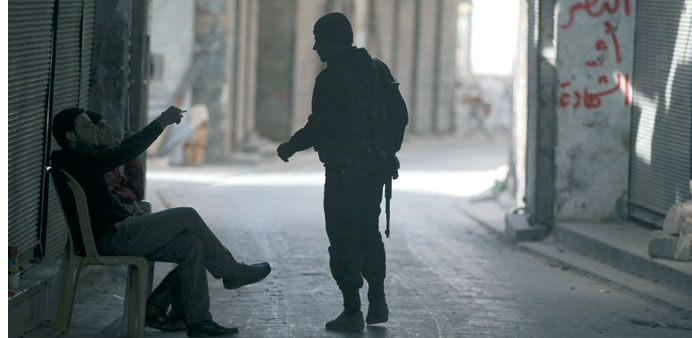
Fighters from the Free Syrian Army patrol a town in Aleppo.