


|
The presidents of Iran and Pakistan yesterday inaugurated the construction of a much-delayed section of a $7.5bn gas pipeline linking the two neighbours, Iranian media reported. |
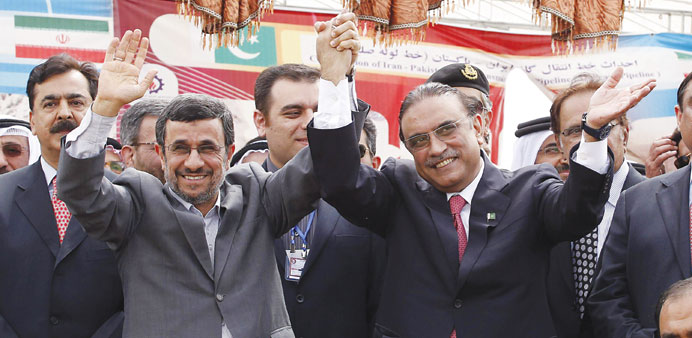
The project was launched at a ceremony on the Iran-Pakistan border attended by President Mahmoud Ahmadinejad and his Pakistani counterpart Asif Ali Zardari, the reports said.
The two leaders jointly unveiled a plaque before shaking hands and offering prayers for the successful conclusion of the project, which involves the laying of a 780km section of the pipeline on the Pakistani side, expected to cost some $1.5bn.
“The completion of the pipeline is in the interests of peace, security and progress of the two countries ... it will also consolidate the economic, political and security ties of the two nations,” they said in a joint statement.
Ahmadinejad hailed the fact that work on the new section of pipeline was going ahead despite US sanctions against Iran’s oil and gas sector imposed over its controversial nuclear programme.
“This gas pipeline is a sign of show of resistance against domination,” Ahmadinejad said.
“There are some nations who are against the progress of people, and so they are using the nuclear issue as a pretext to hinder the progress of the nations.” he said.
“This pipeline has nothing to do with the nuclear issue, you can not build a nuclear bomb with natural gas,” he said, speaking alongside Zardari in comments broadcast live on state television.
“This pipeline is peacemaker, so if those countries are not co-operating, then they should not get in the way.”
Although the pipeline on the Iranian side has almost been completed, Pakistan has run into repeated difficulties, both in financing the project and over the threat of US sanctions.
Like the European Union, Washington has slapped crippling unilateral sanctions on Iran over and above UN sanctions imposed over its refusal to suspend uranium enrichment.
Iran eventually agreed to finance a third of the costs of the Pakistani part of the pipeline, with the work to be carried out by an Iranian company.
Pakistan says it plans to generate 20% of its electricity using Iranian gas from the pipeline.
The visit was Zardari’s second to Iran in a fortnight and came after officials said a consortium would start work on the pipeline on Pakistani territory despite the US sanctions threat.
Analysts said Zardari’s Pakistan People’s Party was likely to seek to exploit its defiance of Washington over the pipeline to boost its popularity ahead of a general election in May.
“They will say that we signed the deal with Iran despite US pressure and try to convince voters that we can stand against the US,” political analyst Hasan Askari said.
Anti-US sentiment runs high in Pakistan and five years of PPP government have done little to address the country’s crippling energy crisis, with severe shortages of electricity in the summer and gas in the winter.
Iran has promised $500mn to help Pakistan with the cost of building its side of the pipeline, but it is unclear where Islamabad — grappling with a weak economy — will find the remaining $1bn it needs to complete the work.
Iran has the second largest gas reserves in the world, but has been strangled by a Western oil embargo that has seen its crude exports halved in the past year.
It currently produces around 600mn cubic metres of gas per day, almost all of which is consumed domestically due to lack of exports. Its only foreign client is Turkey, which buys about 30mn cubic metres of gas per day.
“The Pakistani government wants to show it is willing to take foreign policy decisions that defy the US, particularly when such crucial issues as energy security are at stake,” said Anthony Skinner, a director of British-based Maplecroft risks consultancy.
“The pipeline not only caters to Pakistan’s energy needs, but also lodges brownie points with the many critics of the US amongst the electorate,” he said.
The project faces security challenges posed by ethnic Baluch militants who have demanded greater control over Baluchistan’s natural resources, and by Iranian Sunni insurgents also based in Pakistan who are fighting for greater rights in Iran.
“Having a pipeline running through the region makes it particularly vulnerable to bombings and disruption,” said Skinner. “Washington could bolster its support for local elements, causing significant disruption to pipeline infrastructure.”