


Reuters/AFP/Washington
In his week of outreach to Republican senators, US President Barack Obama had lunch with the top Republican and Democrat on the House of Representatives Budget Committee in a bid to bridge differences on the nation’s pressing fiscal issues.
The president had lunch with Republican chairman Paul Ryan of Wisconsin and Chris Van Hollen of Maryland, the committee’s top Democrat, congressional and White House sources said.
Ryan, who was vice-presidential nominee for Obama’s defeated Republican rival Mitt Romney in November, is regarded as the intellectual engine of fiscal conservatism in the House and writes Republican Party budget policy.
Yesterday’s meeting follows days of outreach by Obama, who dined with a dozen Republican senators on Wednesday and made a series of telephone calls to various members of Congress earlier in the week after across-the-board budget cut known as the “sequester” kicked in.
At issue is the stalemate over the US budget and how to rein in growth of the $16.7tn federal debt.
Obama and fellow Democrats want to narrow the fiscal gap with spending cuts and tax increases, while Republicans oppose raising taxes and want to do it all with cuts.
Several Republican senators at Wednesday’s dinner said that it was cordial and that Obama seemed sincere in wanting to work together toward an agreement over the federal budget.
Republican Senator Lindsey Graham called the meeting “productive and substantive”, even as it spotlighted their major differences.
“However, also apparent was common ground on how to move forward,” Graham, of South Carolina, said.
Republican Senator Dan Coats said the meeting produced “a very adult discussion”.
“Instead of being on the campaign trail and the president trying to make his point, we were working together and talking together about the real essence of our problem and how we can get this thing turned from this never-ending short-term fix fiscal cliff stuff into a long-term solution to our fiscal problem,” Coats, of Indiana, said yesterday on CNN.
Senator Tom Coburn said Obama raised the issue of reforming entitlement programmes.
Such programmes, which include Social Security and the Medicare health insurance plan, are exempt from the recent budget cut but make up a huge and growing portion of government outlays as the nation ages.
Whether Republicans would be open to raising revenue through changes to the tax code, as opposed to politically charged tax increases, has been an ongoing issue for conservatives.
Coburn told MSNBC those at the dinner were willing to pay “the political price” of losing their seats in Congress to fix the debt crisis.
Although Republicans noted the meeting was a constructive start, Coburn added that it would take time to rebuild relationships between the White House and Republicans.
“If you’ve had years of having somebody put their finger in your eye and question your motivations and ascribe things to you that aren’t accurate, that takes some healing,” the Oklahoma Republican told MSNBC’s Morning Joe yesterday.
Next week, Obama, a Democrat, will take his case directly to Capitol Hill and will speak to Republicans from the Senate minority and the majority in the House of Representatives.
Though Republicans are publicly welcomed signs of Obama’s outreach, the differences between the two sides remain deep.
After securing higher tax rates for the wealthy last year, Obama wants to raise revenues through closing tax loopholes used by the rich and corporations to combine with reductions in spending to reduce the deficit.
Many Republicans however warn that they will not permit any tax increases.
The question now is whether Republicans could be persuaded to raise more revenue in a large deal encompassing reforms to entitlement social programs dear to Democrats or in a sweeping reform of the tax code.
House Republican Speaker John Boehner, with whom the president has cool relations after several failed attempts to reach such a “grand bargain”, gave a tepid welcome to Obama’s turn in strategy.
“It was really kind of interesting that this week we’ve gone 180. Now after being in office now over four years, he’s actually going to sit down and talk to members,” Boehner said. “I think it’s a sign, a hopeful sign, and I’m hopeful that something will come out of it. But if the president continues to insist on tax hikes, I don’t think we’re going to get very far.”
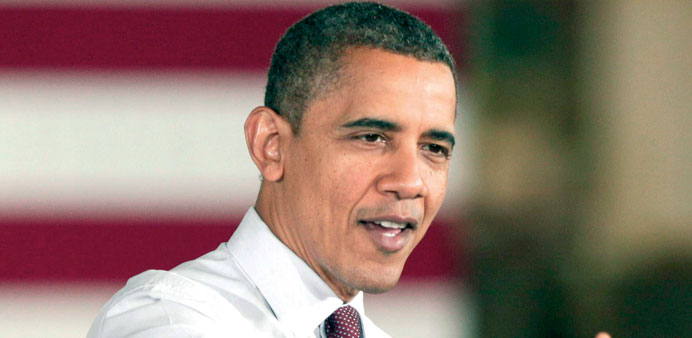
Obama: seeking common ground.