Reuters/Geneva
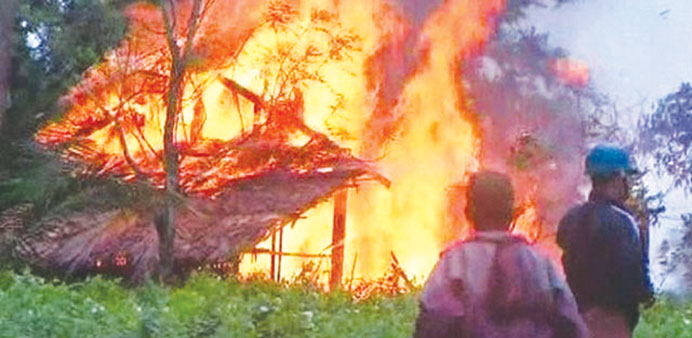
The crisis in Myanmar’s Rakhine state, where sectarian violence erupted last year, risks spreading and endangering democratic reforms undertaken since military rule ended in 2011, a UN investigator said yesterday.
Myanmar should release the remaining 250 political prisoners, end torture by police and address root causes of ethnic conflicts, the independent investigator Tomas Ojea Quintana said.
“There remains a large gap between reform at the top and implementation on the ground,” he said in an annual report to the UN Human Rights Council.
“Rakhine state is going through a profound crisis that threatens to spread to other parts of the country and has the potential to undermine the entire reform process in Myanmar.”
Ojea Quintana visited Myanmar for five days last month and held talks with ministers, opposition leader Aung San Suu Kyi and prisoners. He also visited camps for displaced people uprooted by ethnic clashes in Rakhine and Kachin states.
“While the process of reform is continuing in the right direction, there are significant human rights shortcomings that remain unaddressed, such as discrimination against the Rohingya in Rakhine state and the ongoing human rights violations in relation to the conflict in Kachin state,” he said.
They must not become entrenched and destabilise the reform process, said Ojea Quintana, an Argentine human rights lawyer.
Deadly sectarian violence erupted last June and October in Rakhine state between Rakhine Buddhists and Muslim Rohingyas. “Both Muslim and Buddhist Rakhine communities continue to suffer the consequences of violence that the government has finally been able to control, though question marks remain over the extent to which excessive force has been used,” he said.