


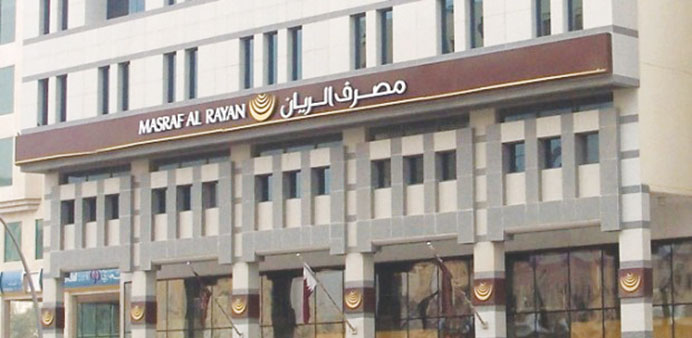
Masraf Al Rayan said on February 25 it would spend as much as 1bn riyals ($275mn) to buy into a Libyan lender it didn’t name. It will seek a 40% stake and convert the bank into a Shariah-compliant institution, according to a presentation shown to shareholders.
Bloomberg/Doha
Masraf Al Rayan’s plan to buy a stake in a Libyan bank will give Qatar’s biggest Islamic lender by market value a foothold in the North African oil producer amid plans to rebuild the economy.
“The ground is fertile,” the Doha-based bank’s chairman Hussain al-Abdulla told reporters in the Qatari capital after a shareholders meeting on February 26. “There’s a need to develop infrastructure in Libya. There’s a need to develop the education sector. There’s a need for hospitals. There’s a need for banks because there aren’t many.”
Masraf Al Rayan, which offers banking services that comply with Shariah ban on interest, said on February 25 it would spend as much as 1bn riyals ($275mn) to buy into a Libyan lender it didn’t name. It will seek a 40% stake and convert the bank into a Shariah-compliant institution, according to a presentation shown to shareholders the next day.
Qatar’s small population and the banking industry’s 112% loan-to-deposit ratio - the Gulf Co-operation Council’s highest according to central bank data - are spurring lenders to expand into North Africa.
QNB became the first Middle East lender to cross $100bn in assets when it agreed to buy Societe Generale’s Egyptian unit in December.
Masraf Al Rayan’s Libyan target was founded in the city of Benghazi in 1997 with capital of 3mn Libyan dinars ($2.4mn), the shareholder presentation showed. That is the same as the authorised capital of Mediterranean Bank, established in Libya’s second-largest city in 1997, according to its website. Officials of the lender didn’t respond to an e-mail seeking comment. Benghazi was the birthplace of the 2011 revolt.
Banks in Qatar, home to 1.9mn people, are eager to invest in more-populous nations after average net interest margins, a measure of the profitability of lending, shrunk for a second year in 2012. Commercialbank’s is in talks to buy Alternatifbank in Istanbul.
Lenders in Qatar raised $3.8bn from bond sales in 2012, compared with none a year earlier, to take advantage of record-low borrowing costs, data compiled by Bloomberg show. The yield on QNB’s $1bn of 3.375% securities due 2017 has dropped 108 basis points, or 1.08 percentage points, in the past year to 2.25% at 1.21pm yesterday in Doha.
Libya, home to about 6mn people, has been saddled with dilapidated infrastructure, few functioning state institutions and an upsurge in militia activity since the revolution that ousted Muammar Gaddafi, who was killed in October 2011. The country has been plagued by instability and fighting between militias, including a September attack on the US consulate in Benghazi that left Ambassador Chris Stevens and three other US personnel dead.
“With all the chaotic things happening, people are afraid to approach Libya,” Ahmed Shehada, head of trading at QNB Financial Services, said by phone on February 28.
Still, the country’s investment opportunities are relatively untapped compared with Egypt, Shehada said. QNB and Emirates NBD bought stakes in Egyptian lenders in December to gain access to a population exceeding 80mn people.
“Of the countries in the Arab Spring, Libya is not a bad one to walk into provided the right price,” Shehada said. Masraf Al Rayan’s longer-term objective “is to see this flourish when the dust settles,” he said.
Unlike other nations that saw leaders ousted in regional uprisings, Libya has no external financing needs because of its oil wealth. The country’s economy, which contracted 60% in 2011, is expected to expand by 17% this year and post average growth of 7% a year from 2014 and 2017, the International Monetary Fund said in November.
Global demand for Shariah-compliant banking is growing, with Islamic financial assets set to double to as much as $3tn by 2015, Standard & Poor’s estimates show. Masraf Al Rayan is seeking to expand into Europe with the acquisition of Islamic Bank of Britain, al-Abdulla said. “From Britain we can move to Paris,” he said. “From Paris we can move to Frankfurt. It’s an opportunity to develop the bank.”
In Libya, a majority Muslim nation, an estimated 15bn dinars of funds are kept outside of the banks, Ali Mohammed Salem, deputy central bank governor, said last April.
Masraf Al Rayan plans to make its acquisition along with a partner that will acquire an additional 11%, according to the shareholder presentation. The Doha-based bank would be entitled to appoint three of seven board members, as well as the chief executive officer, it showed.
“The strategic position is good, in North Africa and close to Europe, and there is need for lots of investment in Libya,” al-Abdulla said.