


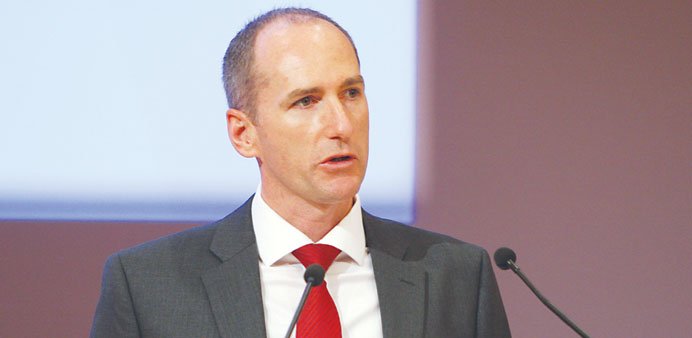
The global energy infrastructure investment will need to average approximately $1.5tn a year through 2035, with half of that amount related to oil and natural gas, in order to meet demand, ExxonMobil Qatar vice president Alistair Routledge said, citing International Energy Agency estimates.
In total, ExxonMobil has invested more than $125bn in energy projects over the past five years, he said at the 2013 Energy Outlook Forum at the Four Seasons yesterday.
“Here in Qatar we are reminded of what we can achieve when visionary leaders of government establish sound policies and enable international partners to work, invest, and innovate together. In just over two decades, Qatar has risen to become the world’s leading supplier of liquefied natural gas.
“In the process, the nation has unleashed its own economic growth, supported innovation, spurred job creation, and strengthened the energy diversity that allows free markets to maximise the value of national resources for producers and consumers,” Routledge said.
With the clear direction set forth by HH the Emir in the Qatar National Vision 2030 and the strategic understanding that the National Development Strategy offers in moving toward that vision, Qatar has become an example for growing nations around the world.
This foresight, the understanding of the critical role that planning should play in long-term strategy, is also a concept deeply rooted in ExxonMobil’s culture, Routledge said.
“An annual exercise involving hundreds of people in our organisation, the outlook for energy that we are presenting today is used to guide our global investment decisions,” Routledge said.
All of ExxonMobil’s major investments, he said, have their roots in the outlook for energy.
“For example, our decision over a decade ago to invest with Qatar Petroleum to help develop its natural gas reserves was grounded in our view that global demand for gas would rise significantly, as was our multibillion dollar purchase of US-based XTO Energy in 2010.
“The outlook for Energy tells us that the world’s energy supplies will continue to grow more diverse, and our investments reflect those forecasts. In addition to our continued investments in conventional oil and gas production, we are making significant investments in oil sands, deepwater and Arctic operations, and the development of oil and natural gas supplies found in shale and other tight rock formations,” Routledge said.
He said the demand for reliable, affordable energy exists every day in every community.
Successfully meeting this demand requires foresight and effective long-term planning, followed by huge investments and years of work to build the infrastructure required to produce and deliver energy. It also requires the ability to understand and manage an evolving set of technical, financial, geopolitical and environmental risks in a dynamic world, Routledge said.