


Bloomberg/Dubai
Indonesia’s state-owned oil company said a decision is imminent on a Kuwaiti request to increase government investment in a planned 300,000 barrel-a-day refinery in West Java or East Kalimantan.
Government officials in Jakarta are expected to announce by March whether they will boost Indonesia’s contribution to the project, Ardhy N Mokobombang, a vice-president at Pertamina’s refining directorate, said in an interview Thursday.
The refinery is among the planned projects and upgrades that would more than double processing capacity in Indonesia, Southeast Asia’s biggest economy, to 2.2mn barrels a day by the end of 2020. Demand for oil products in the former Opec member will be about 1.82mn barrels a day by 2025, exceeding domestic production of 1.15mn, according to a Pertamina forecast.
“We need some kind of additional support from the government,” such as public investment in infrastructure, for the project to advance, Mokobombang said. “By the end of March, we should have an answer from the government, and we can go back to our partner and ask them if they are satisfied.”
Kuwait Petroleum International, Pertamina’s partner in the prospective refining venture, has said it needs more support from Jakarta to earn a sufficient return on its investment, according to Mokobombang.
No one at Kuwait Petroleum, KPI’s state-owned parent company, answered a telephone call seeking comment before business hours today in Kuwait.
The project would be built in Bontang, East Kalimantan, where Pertamina owns a possible refinery site, or Balongan, West Java, where land would have to be bought, Mokobombang said. South Korea’s SK Energy would also participate in the development and operation of the plant, whose planned start is in November 2019, he said.
Pertamina is also preparing to begin a feasibility study on a 300,000 barrel-a-day refinery project with Saudi Arabian Oil in Tuban, East Java, Mokobombang said. The project would begin operation in April 2020.
The two ventures would buy about half their crude feedstock from the Middle Eastern partners, with the rest purchased on the spot market, Mokobombang said.
“We don’t want to totally be locked into one kind of crude,” he said.
Pertamina plans to share as much as 30% of the equity in the projects to its partners, with the remainder financed by debt, Mokobombang said. A third project in Plaju, South Sumatra, would be fully funded by the Indonesian government. The three new refineries will cost between $13bn and $14bn, said Mokobombang, who attributed the price tag to the refineries’ integrated chemical plants.
The company also plans from $10bn to $12bn in upgrades at existing refineries to boost processing capacity by as much as 30% to 1.3mn barrels a day, he said.
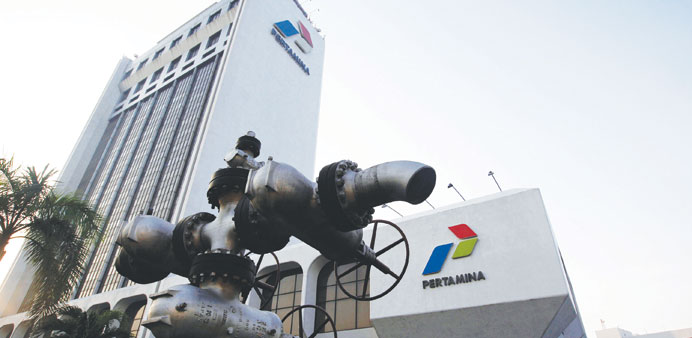
Indonesia’s state oil company Pertamina’s headquarters in Jakarta, Indonesia, (file). Pertamina said a decision is imminent on a Kuwaiti request to in