


Reuters/London
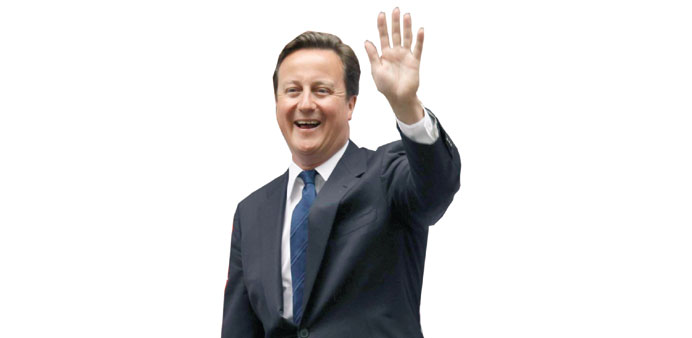
Prime Minister David Cameron yesterday played down the prospect of a referendum any time soon on whether Britain should leave the European Union, defying calls from within his Conservative Party and the public.
Cameron will deliver a major speech on January 18 in the Netherlands setting out how he wants to renegotiate his country’s relationship with the European Union, his official spokesman said yesterday. “He sees it as important to set out his view about it being in the British national interest to remain in the European Union, though (with) a changed relationship,” the spokesman said.
The premier’s speech could deepen fractures within his own party, and strain ties with his Liberal Democrat coalition partners.
A weekend poll by influential website ConservativeHome found that 78% of Conservative Party members either want Britain’s relationship with the EU reduced to access to its common market or to leave the bloc altogether.
“If we had an in-out referendum tomorrow, or very shortly, I don’t think that would be the right answer for the simple reason that I think we would be giving people a false choice,” Cameron told BBC radio.
“Right now I think there are a lot of people who say ‘I would like to be in Europe, but I’m not happy with every aspect of the relationship, so I want it changed’. That is my view.”
Conservative infighting over Europe helped topple previous party leaders, and splits on the issue appear to be deepening as Cameron’s speech nears.
Communities Secretary Eric Pickles, a Conservative, said on Sunday he hoped it was in Britain’s interest to stay in the EU, but “we shouldn’t stay at any price”.
Both pro and anti-Europe senior politicians stepped up their campaigns over the weekend, with eurosceptic Conservative group “Fresh Start” pledging to demand a radical repatriation of powers from Brussels this week.
On the other side of the debate, Conservative Party grandee Michael Heseltine said on Saturday Cameron’s plan to change Britain’s relationship with the EU was an “unnecessary gamble”, and put the country’s status as a business destination at risk.
The LibDems, the Conservatives’ junior partners in coalition rule, are pro-Europe, and divisions over the issue threaten to put renewed strain on the partnership.
Cameron says he wants Britain to remain in the EU - a major trading partner - but is under pressure from an increasingly eurosceptic public to repatriate powers from Brussels or leave the bloc altogether.
The anti-Europe UK Independence Party has surged in popularity in the last year, wooing Conservative voters and threatening to split the right-wing vote ahead of a 2015 general election.
An opinion poll on Sunday put UKIP ahead of the Conservatives in next year’s European Parliament elections.
Cameron says he plans to renegotiate Britain’s ties with the EU and seek the public’s “fresh consent” for the new deal, telling the BBC he believed he had allies in his efforts to repatriate powers from Brussels.
Cameron would not be drawn on how he would seek the public’s approval for a prospective new deal, saying only he was “not against” referendums, though experts expect a promise of some form of vote after the 2015 national ballot.
US confirms unease at premier’s plans
Barack Obama’s state department yesterday publicly backed the official who criticised Cameron’s plans to hold a European referendum. In a move that confirmed US unease goes right to the top of the administration, spokeswoman Victoria Nuland defended assistant secretary Philip Gordon at the daily press briefing. “We generally don’t have assistant secretaries of state going out and giving press conferences and freelancing, if that’s what you’re asking,” she told reporters probing the significance of the comments. “Assistant secretary Gordon very much spoke for the administration.” Nuland said it was entirely a matter for the United Kingdom to decide whether to stay in the EU or quit, but added: “As assistant secretary Gordon has said, we value a strong UK voice in the EU.”