


 |
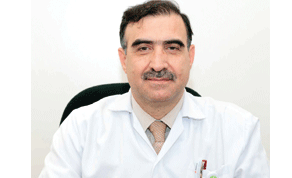
| Dr Muayad: early detection and prompt treatment key to success |
While the patient was with her daughter at Hamad Hospital, she exhibited the symptoms of a stroke, losing her ability to speak and being unable to move on the right side of the body before falling unconscious.
She was rushed to the emergency department where a computomography (CT) scan showed a stroke with hemiparalysis on the right side of the body associated with speech loss.
The attending medical team decided to give her a thrombus dissolvent injection, a medical procedure normally administered in similar cases of stroke, and which has been proven to lead to remarkable improvement in 94% of stroke cases treated by the method.
“Afterward, the patient was sent to the Intensive Care Unit and she regained consciousness the next morning. She gradually resumed her speech ability and movement in the right side of her body, and later fully recovered,” HMC emergency medicine consultant Dr Kasem Muayad, who was a member of the attending emergency and neurology team, said.
“The patient is currently confined in a non-urgent cases room, and regularly walks to the physiotherapy section for rehabilitative exercise sessions. She is now free of all stroke symptoms and will be discharged within a few days,” he said.
Besides Dr Muayad, other members of the attending team were Dr Omar al-Mahin, Dr Hani al-Dulaimi, Dr Azhar Abdul-Aziz, Dr Zeineb Basim, and neurologist Dr Atlantic D’Souza.
Brain strokes occur mainly among people over 50 years old. Its main causes include arteriosclerosis due to high cholesterol level, uncontrolled hypertension and diabetes, as well as an unhealthy lifestyle, including an unhealthy diet and lack of physical exercise.
Eight stroke cases have been successfully treated at the emergency department this year with thrombolytic drug injections and all the patients have had remarkable improvement and been discharged from the hospital.
Thrombus dissolvent is used particularly for the treatment of heart strokes and should only be used for brain stroke for not more than four hours.
The treatment should also be cautiously used for elderly patients, as the latter are likely to be suffering from hypertension and vascular diseases.
Dr Muayad highlighted the importance of knowing the signs and symptoms of stroke, which may include sudden numbness or feeling of weakness in an arm, leg, or on the face, especially on one side of the body; sudden confusion; trouble with speech or comprehension; trouble seeing with one or both eyes; trouble with walking; dizziness; loss of balance or co-ordination; and, severe headache with no known cause.
He emphasised that the success of the treatment depends on early detection and prompt treatment of the stroke.