


 |
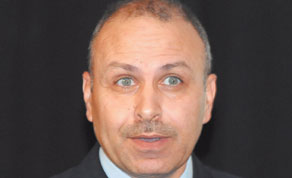
| Mohamed Abdah |
A master plan for pedestrian movements is to be issued in a few months, a senior official from the Ministry of Municipality and Urban Planning told Qatar Projects 2012 conference yesterday.
New guidelines are also proposed for an Intelligent Transport System, bicycle movement, heavy truck movement and improving safety for all modes of transport.
“A 20-year development plan and a five-year implementation plan have been envisaged for the Qatar Transport Master Plan (QTMP),” explained Mohamed Abdah, director, Transportation and Infrastructure Planning, MMUP.
Regarding the master plan for bicycle movement, the vision is to make Qatar the centre of cycling culture and sport in the Gulf region.
“The goals are to improve the use of bicycle in Qatar and increase safety for bicycle users on all roads in the country,” the official said.
Given a projected ultimate capacity of population pegged at 3.8mn and capacity of employees at 1.8mn, the objective is to develop a world-class transport system for Qatar.
“Linking all mega projects, such as the New Doha International Airport, Losail City, The Pearl-Qatar, and Education City is one of the key objectives of the transport master plan,” Abdah said.
The aim is to provide public transport services as attractive as car trips. Measures including introduction of parking fees and congestion charge are being considered.
“The iconic Doha Bay Crossing project’s planning is complete. It is now with the Public Works Authority for implementation. The options will be bridge, tunnel and road,” he said.
The QTMP is being continuously revised so as to accommodate the developments requirements. The Transport and Infrastructure Planning Department is working with the 2020 Olympic Committee and 2022 Fifa World Cup Committee for safe and efficient accesses to all proposed stadiums.
“A pilot project is proposed for a Bus Rapid Transport System with bus bays on the median and pedestrian bridges to enable safe passage of travellers from and to either side of the road,” Abdah added.
The need for Transit Oriented Development (TOD) in Qatar was highlighted by Ian Lyne, director of development strategy, Place Dynamix, a specialist consultancy providing management, planning, design, training, research and other services under a holistic approach.
“There is a need for more compact cities in tune with their local environment,” he said while explaining that TOD reduces the negative impacts of movement.
The work environment should be localised in the satellite cities as opposed to travelling to and fro to one point, as it is happening in Qatar now, with Doha being the focal point.
“TOD is a catalyst for urban regeneration. The potential around transit stations should be unlocked with mixed use developments. Consumers ought to be placed at the heart of the dynamic,” Lyne said.