


 |
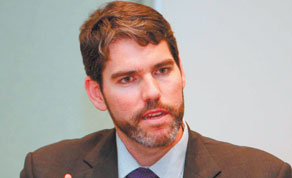
| Bart Cahir: “This is a wonderful place, we see vibrancy here” |
ExxonMobil lays emphasis on ensuring the safety and reliability of its joint venture LNG trains and other strategic assets in Qatar with QP and supplying energy so that the world economies can continue to grow.
ExxonMobil also looks forward to help Qatar meet its energy needs as the country prepares to host the big event (FIFA World Cup in 2022), said the new President and General Manager of ExxonMobil Qatar, Bart Cahir.
In his first exclusive interview to a Qatari newspaper after taking over as ExxonMobil Qatar chief, Cahir told Gulf Times that for ExxonMobil and its joint ventures (JVs), the emphasis in the near term was on the safety and reliability of the liquefied natural gas and the domestic gas businesses.
“ExxonMobil participates in 12 of the 14 LNG trains in Qatar, and we are the only international oil company participating in the domestic gas business through our joint ventures with QP – Al Khaleej Gas and Barzan.
“These are very critical assets; not just here in Qatar, but in the global industry as a whole. There are buyers out there; relying on the gas that is being produced here… so that they can cook their food…heat homes… run air conditioners…and businesses. In many ways the world relies on Qatar and its joint ventures. For us, the first point of emphasis is safety and reliability of those trains and making sure they will be able to deliver what they have committed.”
On developing the current assets, Cahir said: “Obviously, Qatar and QP have the sovereign right to best manage their resources for the long term. We do support that. If there are opportunities to boost production and expand, we will certainly hope to participate.
“Again, I would say, we always discuss these kinds of opportunities with Qatar Petroleum. In the near-term, however, there are more important opportunities. And these are to ensure that all the relatively new infrastructure operate as efficient as possible. One of things we want to do is to produce the 77mn tonnes of LNG with as little gas as possible. That’s where are focused now.”
While meeting the future energy demands is pertinent, Cahir said the fact remains that it is a capital-intensive business and requires technology and partnerships among resource holders and national and international oil companies. Significant investments are required and the markets need to realise that.
He said the joint venture Golden Pass Terminal in the US is a “very strategic asset”.
“We continue to deliberate around the best ways to optimise the use of that facility in the near term. We definitely see it a strategic investment for the longer term,” he said.
The Golden Pass Terminal is 70% owned by Qatar Petroleum while the remaining 30% are shared by ConocoPhillips and ExxonMobil. The Golden Pass LNG terminal is capable of importing 15.6mn tonnes of LNG per year, or approximately 2bn cubic feet of natural gas per day, through its dual berth ship docks.
Cahir said ExxonMobil remained committed to contributing to Qatar’s “economic wellbeing”.
“This is a wonderful place, we see vibrancy here. This is a country, which has been successful in the last 20 years or so, and it has been a lot to do with the vision of the HH the Emir, Sheikh Hamad bin Khalifa al-Thani.
“And of course, our hope is that ExxonMobil has been able to contribute to that. Personally, it has been a very wonderful place to come; people are very warm. The business climate is excellent; the emphasis is on transparency and strong business ethics. It is a very enjoyable environment to work.”
Asked whether ExxonMobil still considered setting up a joint venture petrochemical complex in Qatar, Cahir said: “Our relationship with QP has been historic and long standing. At any time when you have relationships of that nature, you always look at ways to come and invest and enhance value throughout the value chain in the oil industry- whether it is upstream, production or opportunities downstream in refining, petrochemicals. We continue to have a lot of discussions with our partner Qatar Petroleum and that includes opportunities in the petrochemical segment.”