


 |
|
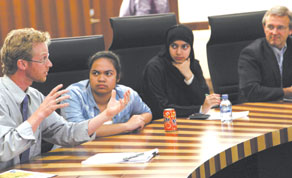
Students’ debrief to various officials at the closing session of the crisis simulation. |
The event, organised in partnership with Georgetown University’s Institute for the Study of Diplomacy (ISD) in Washington, DC, included 22 student participants from SFS-Q, the Academic Bridge Programme, as well as local high schools.
Following intense rounds of negotiations and engagement by all stakeholders in the conflict – including the UN, US, EU, Congo, Rwanda, African Union and aid agencies – the culminating session was led by “UN Secretary General”, played by the SFS-Q dean, Gerd Nonneman.
“The way students played their roles was very thoughtful, meticulously prepared, and based on real events and documents,” said Dean Nonneman, adding: “The negotiations and conversations here were not unrepresentative of the real world. They mirrored just how hard it is for diplomats and decision-makers in a crisis situation to deal with the details and complexities of multiple players and factors they often aren’t familiar with at the outset. And just like in the real world, the students underwent an intense learning process.”
The simulation was a multidimensional exercise combining real-world events and fictional elements that helped facilitate students to think about and experience domestic and international efforts to contain a conflict that threatens to become a regional war.
In the sequence of rounds, “global organisations” and “countries” engaged in bilateral and multilateral talks – often emotional, at times triumphant – before presenting their own views and reservations to the “UN Secretary General”, who in his presiding meeting called on all parties to explore peaceful means to end the conflict.
Dmitriy Frolovskiy, a student of International Politics at SFS-Q, who represented the “European Union”, said: “We were able to engage intensively with the topic itself, and in the process also got to know our fellow students at SFS-Q better.”
“Also interesting was the hands-on experience of the way international system works and decisions and resolutions are made based on each other’s ideas,” added Frolovskiy.
James B. MacGregor, the assistant dean for Academic Affairs, who organized the event, said: “If our students leave Georgetown with the skills required to negotiate and reach consensus in different groups who don’t necessarily see eye-to-eye, then we would have done our job.