


 |
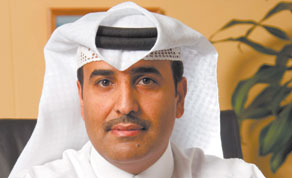
| Issa al-Mohannadi: ‘Seeking an increase in sharing cross-cultural experiences through collaboration |
The Qatar Green Building Council (QGBC) hopes to play a more active role in supporting the adoption, legislation and implementation of green building practices in the country, chairman Issa al-Mohannadi told Gulf Times.
“We seek an increase in sharing cross-cultural experiences through collaboration with fellow green building councils across the world, realise our efforts in promoting sustainable practices and hope Qatari businesses imbibe these as the core of their infrastructure, right from the planning stage,” he explained.
QGBC is hosting today at InterContinental Doha from 6pm a recognition ceremony for founding organisations under the theme ‘Let’s talk green’.
Jassim Telefat, from Qatar Foundation (QF) Capital Projects, will give the opening remarks followed by a presentation by al-Mohannadi on the transition of QGBC into an official entity, and announcement of interim board members.
Establishing QGBC was a significant step forward towards leading the country to become more environmentally
sustainable.
In line with Qatar National Vision 2030, QGBC is looking to establish a “future path of development compatible with the requirements of protecting and conserving the environment”. “The building process is resource hungry and, as a growing community and economy, we have a responsibility to ensure that our developments are environmentally and socially sustainable,” al-Mohannadi said.
Since QGBC’s inception as an initiative in 2009 by a decree signed by Qatar Foundation chairperson HH Sheikha Moza bint Nasser, it has built important partnerships with the industry and community through membership and sponsorship programmes, engaging multiple stakeholders in advancing a green building culture and sharing the benefits that come with it, he pointed out.
QGBC has been proactive in the sphere of educating the community with numerous events promoting sustainable practices for green building design and development.
“In 2010, we held the first of a series of seminars on green building practices along with training collaborations with Building Research Establishment Gulf.
“The same year we launched our membership programme and signed an agreement with Qatar University aimed at cultivating a green culture among the youth and the education sector.
QGBC promotes technical training with training workshops in sustainability ratings systems, LEED (Leadership in Energy and Environmental Design) as well as Qatar’s own QSAS (Qatar Sustainability Assessment System).
QGBC also initiated the World Green Building Council’s MENA Network in collaboration with Emirates GBC and Jordan GBC.
“It is also worth mentioning, that through QGBC, Qatar is joining a network of over 80 different countries that run active national green building councils under the umbrella of the World Green Building Council,” he said.
There are currently 24 founding organisations, which belong to the most prominent entities in Qatar. The initiatives of QGBC are channelled by a steering committee comprised of industry figures from different sectors.
The QGBC is currently being led by an interim board of six prominent Qatari engineers, including al-Mohannadi and Telefat.
Rasha Khamis al–Sulaiti, Ibrahim Mohamed al-Jaidah, Ahmed Abdullah al-Abdullah, Ahmad Jassim al-Jolo, and Saif al-Naemi are the others.
“We are seeing great enthusiasm from companies and individuals who agree with us that this initiative is a great one not only for us in Qatar but also for the whole world,” al-Mohannadi said.
QGBC would continue to actively promote and participate in realising Qatar National Vision 2030, especially the
Environment Pillar.
“We would like to see issues like green buildings and environmental awareness occupy a larger space within the area of non-profit work, and we also want to spread awareness of these issues to the general public,” the chairman observed.
He said QGBC does not want green initiatives to be limited to certain projects, but aims for green building practices to become the standard for the whole country.
“With The Gulf Organisation for Research & Development (Gord, formerly Barwa & Qatari Diar Research Institute) already implementing QSAS in the construction sector for new buildings in 2011, we also hope that going forward; such initiatives come from future generations,” he said.
Through the collaboration with and nurturing support of QF, QGBC is already working towards making all of Education City in line with the world’s most stringent standards.
Furthermore, QGBC supports the adoption, legislation, and implementation of green building practices in Qatar, thus having a positive impact on many groups including environmentalists, researchers, and
engineers.
Asked about the changes that are going to happen at QGBC following the transition into an official entity, al-Mohannadi said it will now work as any other organisation with more initiatives in the pipeline and a committed increase in global collaborations.
The current board has been appointed by HH Sheikha Moza bint Nasser and they are going to be elected members.
“We hope to play a more active role in supporting the adoption, legislation and implementation of green building practices,” he stated.
QGBC works closely with the Education City and Msherib projects, both of which share its vision of sustainable
development.
“While a majority of the newer buildings at Education City has been implemented with specifications adhering to global green building standards, we are working towards encouraging all of Qatar to implement green-building practices,” al-Mohannadi said.
Though QGBC is not an enforcing authority, it works closely with Gord which handles the government aspect of implementing the QSAS norms.
Asked if in the long run QGBC would be able to influence people’s daily behaviour with regard to the environment in Qatar, the chairman replied in the
affirmative.
“Our challenge is to convince people that environmental sustainability is something that must be taken seriously and implemented on a daily basis.
“Environmentally friendly language is widely used today, but we intend to make sure this language is actually affecting change in Qatar.
“Change takes time, but when people begin to realise the enormous benefits that environmentally friendly living adds to our lives in the long run, they will alter their behaviour.
“Saving water, electricity, and recycling are some of the basics that many people in Qatar already adhere to. Moreover, our members consist of some of the most trusted organisations in the world, and the influence we can have indirectly through them on the mentality of people in Qatar and beyond will be immense and far reaching,” he added.