


 |
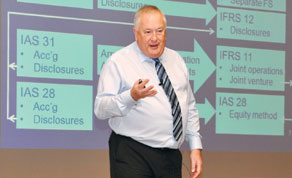
| Charles explains a point at the seminar |
Ernst and Young hosted a two-day seminar for 80 CFOs and financial directors from local companies, updating them on changes in international financial reporting standards.
Ian Charles, Director and Senior Lecturer at Emile Woolf International and guest speaker at the seminar, told Gulf Times on the sidelines of the event that the next two years will bring major changes in financial reporting, with significant consequences for companies.
“The changes that are going to be of most impact around the whole region, including Qatar, are the forthcoming changes to the leasing standard, and that’s going to affect absolutely everybody here whether they are lessees having to bring on-balance sheet an asset and a liability that previously has been off-balance sheet - a so-called operating lease – or for lessors, where they will be recognising the income from their lease receivable in a different way than they are at the moment,” said Charles.
“Also of impact to many of the non-banking clients here will be the future of the revenue recognition project. The largest single number in financial statements is revenue, and it’s used by many valuation professionals driving the way we perceive a company’s value, and recently in the UK a very large company announced an improvement in their profits, but revenue had actually fallen, so they’d obviously had good cost control. What happened? Their share price went down. Even though their profit had gone up, their revenue had gone down, and so any changes to the accounting for revenue, and in particular the question of when do we recognise revenue, are critical. There’s a new revenue recognition standard that affects everybody except banks.”
Charles explained the significance of these developments. “When standards change, for most companies it means there will be a systems project, so software implications, training implications. They need to understand, there is an implication on how a company relates to its shareholders and how it explains the changes both that have happened and that are coming up, so that investors feel there is transparency to what’s going on,” he said.
“Training by many of the people who are here is seen as an investment effort rather than a simple expense for a number of reasons. First of all if they are able to understand in advance the changes their company has to go through - they’re better equipped for it. Even if for some of them they’re learning about a subject that may not today affect their job, who knows what tomorrow’s job will bring?”
A major theme of the seminar was developments in consolidations standards, which Charles said is “going to affect the way a company looks at its group, its family of companies, and in particular which companies are going to be included in a consolidation and which ones are going to be excluded from that.”
He said this particular group of standards is a direct result of the financial crisis, and some of the themes in the new standards stem from G20 concerns, in the light of the banking and subsequent financial crisis.
“This group of standards was published in May this year, and will have mandatory affect from January 1, 2013, which means companies will need to be retrospectively changing their financial statements of 2012, which is just six weeks away, so its quite pertinent for them,” said Charles.
Charles said that effects of consolidation in Qatar may not be of great significance, other than in the banking sector where “some of their special purpose entities may be confirmed off-balance sheet or might be confirmed coming on balance sheet.”