


 |
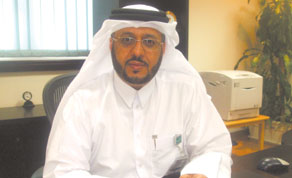
| Dr Ibrahim Shaar |
The Medical Commission has decided to start running its operations in two shifts from next month to ease the problems faced by those availing its services, it was learnt yesterday.
The Medical Commission (MC) is also planning to make it compulsory for all those seeking Qatar’s residency or work visa to provide a GCC-approved medical certificate from a government appointed centre in their countries of origin before a visa is issued to them.
Qatar has made it mandatory for all newcomers to be checked for certain contagious diseases such as tuberculosis (TB), hepatitis and human immuno-deficiency virus (HIV) and be certified medically okay by the commission before they can be allowed to stay in the country.
In August and September, the MC tested a total of 79,696 people for those diseases while for the whole of last year and 2009, the figures were 500,541 and 512,618 respectively.
A total of 7,459 people were found having TB in 2010 and some 5,430 cases in 2009, while some 238 were discovered to have HIV in 2010; it was 201 in 2009.
For both hepatitis A and B, some 372 and 314 newcomers were found to be infected in 2010 and 2009 respectively.
“We have prepared and upgraded our information technology system in order to be able to cope with the workload of two shifts per day as we believe this will increase the number of people we attend to daily thus reducing the present waiting time, which could be up to a month and this especially affects companies,” MC director Dr Ibrahim Shaar told Gulf Times in an interview yesterday.
Presently on a typical day, the commission’s premises is always abuzz with endless queues of labourers, mostly males from Asian countries, who are seen criss-crossing the compound.
The official mentioned that up to 140 new employees are also being recruited, both in administration and technical, for that purpose.
“Although, we recognise the need to expedite actions in attending to certain categories such as the labourers, drivers and housemaids, however, in both shifts, we will be providing services to all categories of employees and I am sure this will help to improve services and of course reduce the waiting time,” he noted.
To the issue of demanding only a GCC-approved medical fitness certificate issued in their country of origin from certain categories of newcomers and from selected countries, he said: “The commission is still hoping to liaise with the appropriate authorities in charge of this issue at the Ministry of Interior but all I know is that newcomers, especially labourers, housemaids, drivers, food handlers, hair-dressers and the rest, are expected to show a medical certificate showing their fitness from an approved centre in their countries, and we will soon begin to enforce and make it known that only GCC-approved medical certificate is acceptable here and anything save of that will not be accepted.”
“Employees from some 11 countries from the Far East and certain Arab countries including India, Bangladesh, Pakistan, Philippines, Sri Lanka, Algeria, Sudan and Egypt must be tested by our approved centres in those countries and show us a fitness certificate on arrival here,” he maintained while mentioning that the MC will still conduct another test on them because they are coming to Qatar from endemic countries and also to checkmate the overseas centres.
“In order to be doubly sure and cross-check the authenticity of the results from these centres, we will still carry out similar tests on the employees and anyone found to have abnormal result after being certified okay by any of the centres will not be accepted into the country and the erring centre will be heavily penalised for violating the rules. We can even close down such centres depending on the gravity of the issue involved,” Dr Shaar explained.
The official mentioned that there are no approved centres in the Philippines at the moment due to some misunderstanding that arose between the commission and the centres as well as the Philippines embassy here in Qatar.
“We are just in the process of approving new centres in the Philippines after the fall out of the initial ones”, he said without expatiating further.