


 |
|
|
Marking a new step in Qatar’s vision to be a leader in stem cell science, Virgin Health Bank has begun processing and storing cord blood stem cells for families in the country in its laboratory at Qatar Science and Technology Park (QSTP).
The state-of-the-art facility, now fully operational, is described as the most technologically advanced of its kind in the region and one of the best in the world.
VHB, which established its global headquarters in Qatar in 2009, identified together with Qatar Foundation and the Supreme Council of Health, the requirement for a cord blood bank capable of meeting the country’s need.
Collecting transplant quality cord blood cells from Qatar since September 2009, VHB has successfully processed and stored hundreds of stem cell units in its facility in the UK.
Working in conjunction with Hamad Medical Corporation, and private sector hospitals, VHB’s is the only stem cell business and bank that the SCH has licensed to operate in Qatar.
“Our unique operational models have set new quality standards in cord blood banking globally and our work in Qatar is attracting interest from the US, Europe and other GCC countries,” VHB CEO Dr Rajan Jethwa said.
VHB’s new regional centre of excellence is the first significant step to meet the shortage of Arab stem cells for life-saving treatments in Qatar, he explained.
“When thousands of cord blood transplants take place around the world every year, saving lives that would be otherwise lost, the current shortage of stem cells from Arab communities means that the chances of finding a matched cord blood unit for an Arab patient within existing international registries are very low,” Dr Jethwa pointed out.
VHB commercial director Andrew Glen observed that the Bone Marrow Donor’s Worldwide registry contains the details of over 18.2mn bone marrow stem cell donors and donated stem cell units but only 45 of those entries are from the Gulf region and none from Qatar.
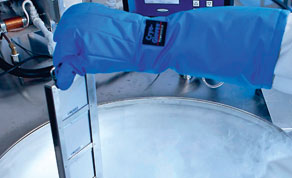
The VHB laboratory in Qatar is built to exceed current international regulatory standards and capable of storing over 50,000 individual stem cell units. It is the first cryo-preservation facility for human cells and tissue in the country.
“The failure rate for cord blood collection and stem cell processing from Qatar by VHB is less than 5% in contrast to 30% in the UK,” Glen said while shedding light on the impressive standards at the facility.
Designed to meet the needs of individual families who want to store their baby’s cord blood, the facility is also fully capable of supporting national public cord blood banking programmes in the near future.
Cord blood stem cells are one of the most exciting areas of development within medical science. Currently there are over 80 diseases for which stem cells can provide a cure. These include blood disorders such as Beta Thalassemia and Sickle Cell Anaemia, cancers of the blood and immune system such as leukaemia and lymphoma.
“About 15,000 cord blood stem cell transplants took place across the world in 2009,” Glen said.
Many leading scientists and doctors believe that clinical trials currently underway around the world will create treatments for other conditions such as diabetes, stroke and heart disease.
But, accessing those treatments will only be possible if genetically matched stem cells are available and this is the significance of VHB’s presence in Qatar.