


 |
|
|
The Hamad Medical Corporation, which has vowed to provide world-class urgent care and services in the country, will soon begin revamping its existing Emergency Department and upgrade it to the planned new state-of-the-art facility, an official said yesterday.
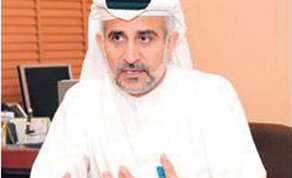
The process will see a total change in the system of attending to patients to provide a much faster, prompt and yet quality service, Emergency Medicine consultant and Emergency Department chairman Dr Khalid Abdulnoor said.
“We plan to create areas in the Emergency where patients can have access to services as quickly as possible, thus drastically reducing the waiting time between having their initial observation or physical examinations done and seeing a doctor.”
The department presently provides services to patients on a priority basis looking at the severity of their problems and whether they constitute a threat to their lives.
So, based on this system, many patients had had to wait for long periods of time for their turn to see a doctor drawing criticism from them that the system is not quick and immediate as expected of an Emergency service.
The Emergency Department seeks to care for patients with acute illnesses or injuries which require immediate medical attention.
However, Dr Abdulnoor said several patients with less urgent problems flock to the Emergency and causing delays in its services.
“We will once again appeal to the general public to stop rushing to HMC for all of their health problems and instead try to utilise primary healthcare centres nearest to them; a majority of the cases are not supposed to come to us at all, they are potentially PHC cases.
“People need to know that PHCs are well positioned in this country to cater to less urgent cases such as cough and cold, aches and pains and even some chronic illnesses can be handled at PHCs,” he said.
The official, who was very upbeat about the restructuring of the ER said the planned new model of seeing patients will help fine-tune services and reduce congestion at the department.
The Hamad Hospital received up to 60,000 emergency visits per month last year, a slightly higher figure than 2009, according to the corporation’s annual report 2010.
“It is our belief that the new process being envisaged will bring about improved care as we will soon start the expansion work on the female section of the department, which is being redesigned to be three times larger than its present size,” Abdulnoor said.
“The new female section will be completely separated from the rest of the area and it will have its own acute or urgent cases section; we also hope to have a female resuscitation unit, X-ray rooms and a pharmacy as well as more enlarged waiting area,” he added.
In January, the corporation had indicated plans to start all-new emergency medicine training in the country by introducing a number of sub-specialties in emergency medicine as part of a continuing education programme.
The sub-specialties will include disaster medicine, trauma resuscitation, paediatric emergency, emergency ultrasound, pre-hospital mobile unit, toxicology and poisoning unit, critical care and observation medicine.
“We intend to develop a first-of-its-kind academic emergency department, which will be based on international standards and will be providing trainings for our staff going for the Arab Board Residency programme,” Dr Abdulnoor said.