


 |
|
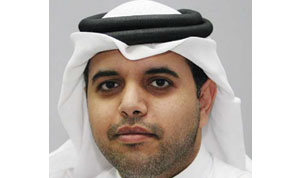
Fahad al-Attiya: calls for innovative methods |
Qatar yesterday laid out a road map for food security in the arid regions of the world.
“I believe that over the next 40 years the world will have a major crisis,” Fahad al-Attiya, the chairman of Qatar’s National Food Security Programme, said in a keynote speech at the World Conference of Science Journalists 2011 being held in Doha.
“The global population is expected to increase by a third, making it over 9bn people. The intensity of consumption will inevitably increase, even grow faster, and income rise in emerging markets and accession of members into the middle class will demand availability of more food stocks, which will require more resources to produce,” he said.
“More demand for food is a certain reality, and innovative methods for water and agricultural productivity will need to be deployed, particularly in dry lands.”
Water scarcity is a growing concern, said al-Attiya, as 3.3bn people are denied access to clean water supplies, and in much of the developing world an estimated 90% of waste water is dumped directly into rivers and fresh water sources.
He said food security and the desired balance with the environment is attainable through “scientific breakthroughs, together with a clear focus and determination from society, business and governments.
“Countries ought to aid each other to implement critical programmes and projects, as risk is not exclusive to one party, but to all of us. Together we can develop and implement affordable solar and wind technology solutions, efficient smart grid electrical systems, innovative means to mitigate environmental hazards that are associated with development, technologies and systems to monitor, control, drive efficiency in consumption and productivity, research and development centres in the areas of agriculture, food safety and production,” al-Attiya said.
“I just remind everyone that the investment per capita on R&D in dry lands is among the lowest. Together we can gear our efforts to develop relevant policies and regulations that will also enable us to develop without further compromising or threaten resources.
“On the national level, Qatar has made up its mind to plan and take action in an attempt to avoid a point of no return. We embraced our challenges by establishing the Qatar National Food Security Programme to develop a comprehensive and sustainable solution to the challenges that Qatar is facing. The programme will promote the development and implementation of solar energy to desalinate sea water, which will then be used for agricultural production. It will also develop research and development centres, educational facilities, and introduce technologies that will allow for preserving natural resources while assisting the country in achieving food security,” he said.
“Qatar, along with many committed nations, is at an advanced stage in establishing the Global Dry Land Alliance. The aim of the Alliance is to enable members to pool their research efforts to improve the state of food security in arid regions through adopting technologies and solutions that will inevitably protect and sustain their achievements.
“The type of issues that are faced by most dry lands is manifested in the lack of knowledge, training and investment. Such deficiencies in these critical areas will almost certainly maintain the suffering that dry lands are facing.”
Qatar has invested in the agricultural sector in a number of African countries, quite significantly in Sudan, and is establishing links to countries like Australia to develop new technologies and guarantee food supplies.
Al-Attiya continued: “I can’t stress more, the need to face the challenges jointly. We need to increase global food supply in the face of climate change, and in the face of the depletion of natural resources. We’ve almost lost two-thirds of our water aquifers here in Qatar over the last 30 years, so we need to meet the demands of the growing population at the same time.”
According to al-Attiya, current water supplies in Qatar would only last for two days.