


 |
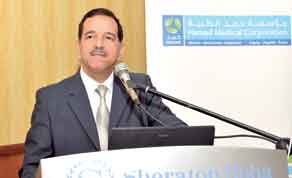
| Dr Zirie speaking during the symposium |
Hamad Hospital conducted a “Fasting and Diabetes Mellitus” symposium on June 11 as part of efforts to raise awareness and encourage prevention of diabetes, which has become increasingly prevalent in Qatar as more people lean towards unhealthy lifestyles.
The event, which was held at the Doha Sheraton, was attended by diabetes specialists and other healthcare professionals.
The symposium titled “Let’s Control Diabetes Now” comes as people prepare to fast during the coming Ramadan and featured specialists who spoke on different aspects of diabetes.
Hamad Hospital Diabetes and Endocrine unit head Dr Mahmoud Zirie spoke on new studies and guidelines for managing diabetic patients who fast during Ramadan and on how diabetics can adjust their medications so they will not experience either hypoglycemia or hyperglycemia.
Zuhair al-Arabi, a dietician, spoke of the importance of maintaining a healthy diet during Ramadan while giving advice on the preparation and consumption of traditional food, including the right portions to be eaten in order to avoid high or low blood sugar.
Manal al-Musallam from the Patient and Family Education unit gave tips on how diabetics can check their blood sugar at home during Ramadan, and what to do when their blood sugar is low or high.
“We want to encourage the prevention of diabetes and lessen the number of people afflicted with this disease by educating our population on how to lead healthy lifestyles,”Hamad Hospital Diabetes/Endocrine unit consultant Dr Sara Darwish said, adding “In Ramadan especially, people will be having difficulty in avoiding Qatari traditional foods, so we are giving them advice on how these foods can be adjusted to be healthy.”
Diabetes is one of the most common chronic diseases worldwide and is broadly divided into two types.
Type 1 diabetes results from autoimmune destruction of insulin-producing beta cells of the pancreas, leading to increased blood glucose while Type 2 diabetes occurs when the body does not respond correctly to insulin, and is caused by factors such as family history and genetics, low activity level, unhealthy diet and excess body weight.
“Type 2 diabetes is more prevalent due to the sedentary lifestyles adapted by many people, as well as their diet which tend to be high-calorie, fatty foods,” Dr Darwish said.
“Persons considered at high risk of diabetes are those with a family history of diabetes, women who have previously had gestational diabetes or who delivered babies weighing 4kg or more, and people who suffer from hypertension or obesity,” she said.
Healthy eating habits and physical exercise are important in preventing obesity and diabetes, she said.
Increased media focus on diabetes prevention and care has promoted early diagnosis of the disease, along with co-ordinated educational efforts by HMC, the Supreme Council of Health, Qatar Diabetes Association, and Primary Healthcare, which also collaborated on the symposium.
The event was sponsored by Novo Nordisk.
“Novo Nordisk is a world leader in diabetes care. Our key contribution is to discover and develop innovative biological medicines and make them accessible to patients throughout the world, to help patients live better lives. We always welcome any co-operation with healthcare institutes in Qatar aiming to increase diabetes awareness and improve its management all through the year, and particularly during certain events like the holy month of Ramadan,” Novo Nordisk sales executive Essam Faragalla said.