


 |
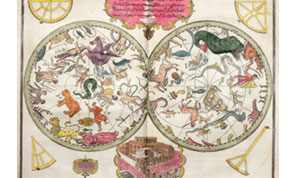
| One of the exhibit which are the going on display |
The QF-backed event offers insights into how their work shaped the scientific understandings of historical Fellows of the Royal Society and the wider European scientific community.
The exhibition, which will move to Doha in December, showcases letters and historical Arabic and Persian manuscripts, and their Latin translations, from its archives.
From the early days of the Society its Fellowship was fascinated by the work of the great Arab scholars. This led to papers and manuscripts being brought from the Middle East and elsewhere to be studied by the Royal Society’s scholars.
Arabick Roots tells the story of the Royal Society’s efforts to translate and understand these works and offers an insight into how they have shaped the scientific understanding of the early Fellows and the wider European scientific community.
When London was devastated by a smallpox epidemic in the mid-18th century, Fellows of the Royal Society turned to their counterparts in the Arabic world to help them understand this terrible disease.
In letters seen publicly for the first time in this exhibition, the Ambassador in Tripoli at the time, Cassem Algiada Aga, describes the practice of inoculation, which had been taking place for centuries in North Africa and the Middle East.
Aga’s letters provided valuable first-hand reassurance about the safety of inoculation at a time when there was serious public fear and mistrust of this life saving practice in Europe, and he was made a Fellow of the Royal Society, joining two existing Arab Fellows, Mohamed Ibn Haddu and Ben Ali Abgali.
Exhibition Curator and Royal Society Dorothy Hodgkin Research Fellow Dr Rim Turkmani said: “This exhibition uncovers the never-before told story of the connections between the early Royal Society and contemporary and classical Arabic learning, and how they were used to solve some of the most pressing problems of the day.”
“This was a time when British society as a whole was largely ignorant of the cultural achievements of the Arabic world – yet we find that the early Royal Society’s group of ‘ingenious and curious gentlemen’ included three Fellows from the Arabic world.
“This forgotten history reveals a rich tradition of communication between two very different cultures, and shows that then – just like today – collaboration across linguistic and cultural boundaries can lead to great results.”
The exhibition displays rare books, scientific instruments and correspondence, showing how Arabic thought and culture influenced and inspired key figures such as Edmund Halley and Robert Boyle.
QF President Dr Mohamed Fathy Saoud said: “By placing today’s scientific innovations in the Arab world in their historical context, Qatar Foundation and the Royal Society are reminding the world of the crucial precedents set by pioneering Arab scholars and scientists, and of the critical impact they made on the development of European and global science across the ages.”
“These powerful lessons from history must now inspire us all across our region to do much more and take our rightful place as leaders in the global development of science, technology and innovation in the 21st Century. Qatar Foundation can and will play a leading role in developing a new ‘golden age of Arab learning’.”
“The exhibition demonstrates and reminds us that collaboration across linguistic and cultural boundaries can generate ground-breaking results – a concept as valid today as it was during the Golden Age,” Dr Saoud added.